Cross-contamination in medical equipment poses a serious risk that can directly impact patient safety. Prevention begins with proper protection during transport and storage. Medical cases play a crucial role in this because they not only provide physical protection but also form a barrier against microbial transfer. By applying the right materials, design, and cleaning protocols, you can significantly reduce the risk of cross-contamination. Let’s look at the key aspects to effectively prevent cross-contamination.
What are the major risk factors for cross-contamination in medical equipment?
The major risk factors for cross-contamination in medical equipment are surface contact, airborne particles, moisture, and human interaction. Medical equipment constantly comes into contact with different environments and people, allowing microorganisms to be easily transferred from one surface to another.
Surface contact is one of the most common transmission methods. When contaminated equipment comes into contact with clean equipment, bacteria, viruses, and other pathogens can spread. This often happens during transport when different medical instruments are stored in the same case without adequate separation.
Airborne particles constitute a second major risk factor. When transport cases are opened, dust particles and aerosols containing pathogens can become airborne and land on other surfaces. In medical environments where sterility is crucial, this can pose a serious problem.
Moisture is another important risk factor because it creates an ideal environment for the growth of microorganisms. Condensation can occur inside cases during temperature fluctuations during transport, creating a humid environment in which bacteria can thrive.
Human interaction may well be the biggest challenge. Every time someone handles medical equipment, there is a risk of microorganism transmission. Insufficient hand hygiene and touching different devices without cleaning in between significantly increase this risk.
During transport and storage, medical devices are particularly vulnerable because they are often not in a controlled environment. The protective environment of a cleanroom or operating room is removed, allowing external factors to have more influence on the sterility of the equipment.
Which materials offer the best protection against cross-contamination?
For optimal protection against cross-contamination, antimicrobial materials, non-porous surfaces, and specially treated fabrics are most effective. These materials actively reduce the survival and multiplication of microorganisms on medical case surfaces.
Antimicrobial materials contain specific substances such as silver ions or copper that inhibit the growth of bacteria, fungi, and certain viruses. These materials are particularly effective for frequently touched surfaces and provide an extra layer of protection when regular cleaning is not immediately possible.
Non-porous surfaces such as high-quality plastic, aluminum, and certain composite materials are essential because they do not absorb moisture or microorganisms. This makes them easier to clean and reduces the risk of microbial colonization. Smooth, seamless surfaces without gaps or corners where dirt can accumulate are ideal for medical transport cases.
Materials with high chemical resistance are preferred because they can withstand regular cleaning with strong disinfectants without degrading. Polypropylene and ABS plastics are popular choices due to their durability and resistance to frequent cleaning.
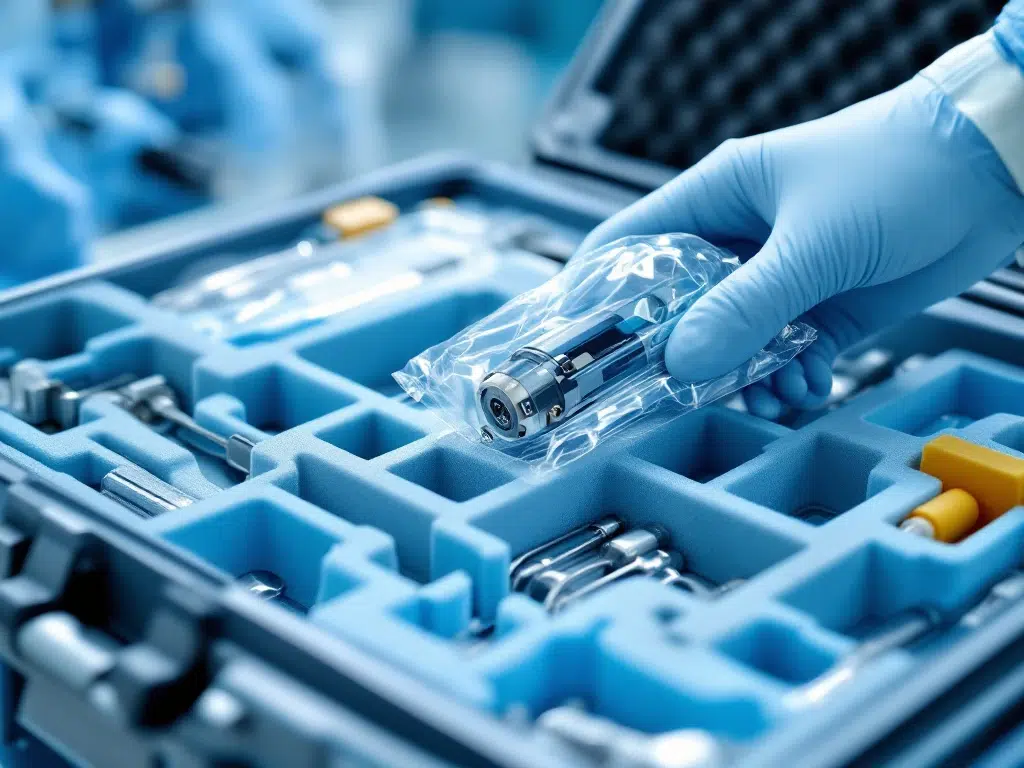
For the interior of medical cases, closed-cell foam materials are optimal because, unlike open-cell foams, they do not absorb moisture. This significantly reduces the risk of bacterial growth. Additionally, these foams can be treated with antimicrobial coatings for extra protection.
In cleanroom environments, materials that emit little to no particles (low-particulate) are essential. Special cleanroom-compatible plastics and coatings reduce the risk of contamination by the material itself, which is crucial for highly sensitive medical equipment.
How does the design of medical cases influence the prevention of cross-contamination?
The design of medical cases plays a crucial role in preventing cross-contamination. Cases with seamless construction, sealed compartments, and modular systems offer the best protection against microbial transfer between devices.
Seamless construction eliminates crevices and corners where microorganisms can accumulate. When a case is formed from a single piece or seamlessly welded, there are fewer places where dirt and bacteria can remain after cleaning. This significantly reduces the risk of cross-contamination, especially for equipment that must remain sterile.
Sealed compartments are essential for physically separating different instruments or devices. By giving each item its own enclosed space, direct contact is avoided and thus also the transfer of microorganisms. Well-designed dividers should be easy to clean and not retain moisture.
Modular systems offer flexibility and allow for adjustments for different types of equipment. This is important because each medical device has unique requirements in terms of protection and sterility. Modular inserts can be interchanged and cleaned separately, further reducing cross-contamination.
Airtight sealing is another important design feature. Cases with IP ratings (Ingress Protection) provide protection against dust and moisture, two important factors in cross-contamination. A case with a high IP rating, such as IP67 or IP68, offers optimal protection against external contaminants.
Innovative design solutions also include pressure regulation systems that stabilize the internal pressure of the case during air pressure differences during transport, without allowing unfiltered air to enter. Some advanced cases even contain built-in UV-C disinfection systems or HEPA filters to purify the air inside the case.
For specific medical equipment such as diagnostic instruments, cases with integrated temperature control are essential. These not only keep the equipment at the right temperature but also prevent condensation that can promote bacterial growth.
Which cleaning protocols are effective for medical equipment cases?
Effective cleaning protocols for medical equipment cases include thorough disinfection, frequent cleaning, and the use of specific agents that are safe for both the case and the equipment. A systematic approach is essential to prevent cross-contamination.
The basic steps for an effective cleaning protocol begin with mechanical cleaning to remove visible dirt. Use a soft brush or cloth with a mild detergent to thoroughly clean all surfaces. Pay extra attention to seams, hinges, and corners where dirt can accumulate.
After mechanical cleaning, disinfection follows with an appropriate agent. For plastic cases, quaternary ammonium compounds or alcohol solutions (70-90%) are effective without damaging the material. Other disinfectants may be needed for metal components. Always ensure that the disinfectant has the recommended contact time to be effective.
The frequency of cleaning depends on use, but as a general rule, cases should be cleaned after each use. For equipment used in sterile environments, cleaning before AND after use is essential. In high-risk environments, daily cleaning may be necessary, even if the case has not been actively used.
Validation of the cleaning process is an often forgotten but crucial step. This can be done with ATP measurements (Adenosine Triphosphate) that detect the presence of organic material, or with microbiological tests that can demonstrate the presence of specific microorganisms.
Special cleaning protocols are needed for cases with electronic components. Use cleaning agents that are safe for electronics and ensure that no liquid can enter electronic components. Isopropyl alcohol (70%) is often a safe choice for cleaning electronic equipment.
Documentation of cleaning procedures is essential, especially in regulated medical environments. Keep track of when cases were cleaned, which methods were used, and who performed the cleaning. This helps identify possible sources of cross-contamination if problems occur.
Conclusion
Preventing cross-contamination in medical equipment requires an integrated approach that takes into account materials, design, and cleaning protocols. By choosing antimicrobial, non-porous materials, seamless constructions with separate compartments, and thorough, validated cleaning protocols, you can significantly reduce the risk of cross-contamination.
Medical equipment deserves the best protection, not only against physical damage but also against microbial contamination. At Faes, we develop solutions that meet the highest standards for protection and hygiene, ensuring your medical equipment remains safe and reliable during transport and storage. By taking preventive measures and using the right cases, you contribute to patient safety and the effectiveness of medical treatments.
Frequently Asked Questions
How can I determine which type of medical case is most suitable for my specific equipment?
First determine the risk factors of your equipment (sensitivity to moisture, temperature, shocks) and the environments in which it is used and transported. Look at IP classifications for protection against dust and moisture (IP67 or higher for full protection). Also consider the frequency of use and cleaning; antimicrobial materials are ideal for frequently used equipment. Consult the manufacturer of your medical equipment for specific transport requirements and seek advice from specialists in medical cases for a customized solution.
What are the most common mistakes when cleaning medical transport cases?
The most common mistakes are: insufficient contact time of disinfectants (always follow the recommended exposure time); skipping hard-to-reach places such as hinges and closures; use of unsuitable cleaning agents that can damage materials; insufficient drying after cleaning, which promotes bacterial growth; and not regularly replacing interior foam that becomes more difficult to clean over time. Document cleaning procedures accurately and train staff regularly to prevent these mistakes.
What additional measures can I take during transport to minimize cross-contamination?
Implement a clear labeling system that indicates the cleaning status of each case (e.g., 'cleaned' or 'to be cleaned'). Use disposable covers for extra protection during transport in high-risk environments. Consider using seals that indicate whether a case has been opened during transport. Keep clean and dirty equipment strictly separated during transport and storage. For very sensitive equipment, you can plan transport routes that avoid high-risk environments and use temperature loggers to monitor environmental conditions.