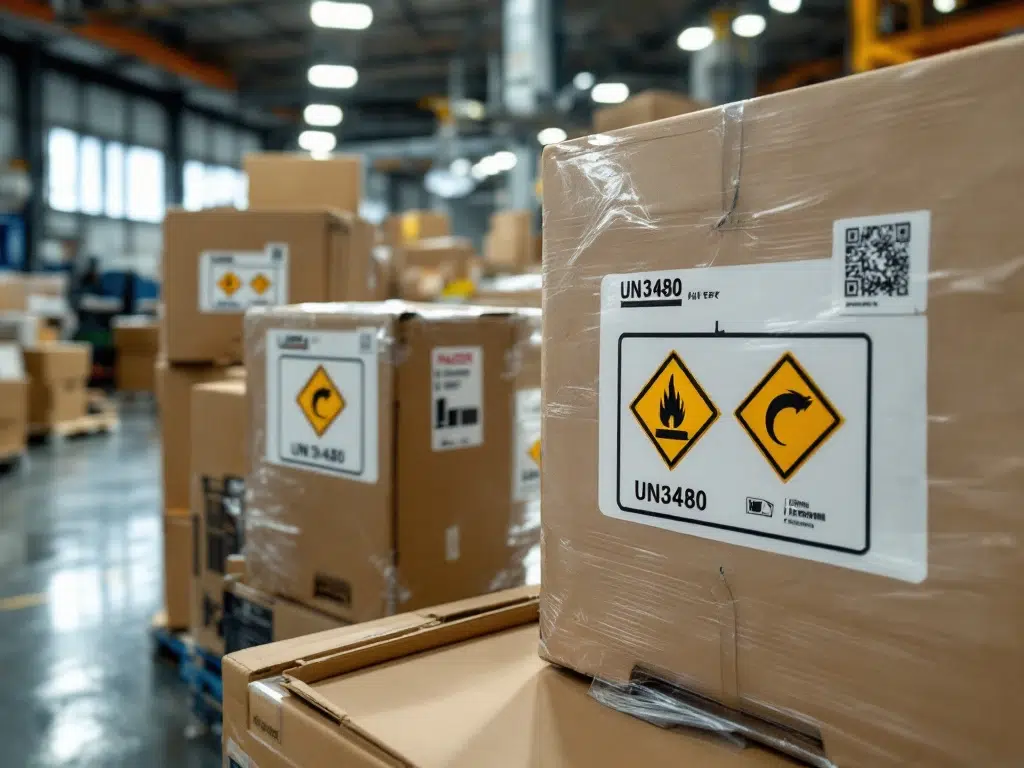
When safely transporting sensitive defense equipment, drop resistance is a crucial characteristic of transport cases. Conducting proper tests to ensure this resistance is essential for protecting valuable and often critical equipment. Drop resistance tests follow strict military standards and require specific methodologies to deliver reliable results. In this article, we discuss everything you need to know about testing drop resistance in defense transport cases, from official standards to test procedures and materials.
What are the official standards for drop resistance in defense transport cases?
The drop resistance of defense transport cases is regulated by various international military standards and certifications. The most authoritative standard is MIL-STD-810, a comprehensive American military standard that prescribes specific test methods for environmental influences, including drop tests. This standard is recognized and applied worldwide for defense equipment.
In addition to MIL-STD-810, there are other important standards that regulate drop resistance:
- UN standards: Particularly relevant for the transport of hazardous materials, such as lithium-ion batteries often used in defense equipment
- DEF-STAN: British defense standards with specific requirements for military equipment
- STANAG: NATO Standardization Agreements that ensure compatibility between equipment from different member states
- IP classifications: Determine the degree of protection against dust and water, often combined with drop resistance requirements
The MIL-STD-810 standard specifies different test procedures depending on the weight and type of equipment. For defense cases, procedure IV (Transit Drop) is especially relevant, which tests drop resistance under conditions that may occur during transport and field use.
These standards prescribe not only the drop height, but also the number of drops, drop angles, the surface onto which the item is dropped, and the temperature conditions under which the test must be performed. Compliance with these standards is often a contractual obligation for deliveries to defense organizations.
What drop test height is required for defense transport cases?
The required drop test height for defense transport cases varies depending on the weight of the case including contents and the specific standard being tested against. Within the MIL-STD-810 standard, different heights are prescribed:
- For cases up to 45 kg: drop tests from 1.22 meters (48 inches)
- For cases between 45-90 kg: drop tests from 76 cm (30 inches)
- For cases above 90 kg: drop tests from 60 cm (24 inches) or lower
These heights are not chosen arbitrarily but are based on realistic scenarios during transport, loading/unloading, and use in operational conditions. For special applications, such as air drops or use in extreme environments, higher drop test heights may be required.
The UN standards for hazardous materials often prescribe a standard drop height of 1.2 meters, regardless of weight. This is because these standards focus on preventing leakage of hazardous contents during a fall.
It’s important to know that some military specifications also require that the case can withstand multiple drops from the same height without damage or loss of function to the contents. This tests durability during repeated use under harsh conditions, which is essential for defense applications.
How do you conduct a professional drop test on transport cases?
Conducting a professional drop test on defense transport cases requires a systematic approach and the right equipment. Here is a step-by-step description of the correct test process:
- Preparation of the test environment: Ensure a hard, non-resilient surface such as concrete or steel, in accordance with standard requirements. The surface must be flat and at least 5 cm thick.
- Configuration of the case: Load the case with representative contents or with dummy weights that simulate the actual equipment. Close all fasteners and locks as in normal use.
- Marking impact points: Identify the required impact points according to the standard. For example, MIL-STD-810 requires drops on each corner, edge, and face of the case.
- Height adjustment: Measure the correct drop height from the lowest point of the case to the impact surface.
- Execution of the drop test: Drop the case without initial velocity or rotation. Some tests require specialized drop equipment that allows the case to fall in the correct orientation.
- Documentation: Record each drop with photos or video, note the exact impact points and any visible damage.
- Post-drop inspection: After each drop, check the structural integrity of the case and the functionality of closures and handles.
- Content inspection: Open the case and inspect the contents for damage or shifting. Test the functionality of the equipment if relevant.
- Reporting: Prepare a detailed test report with all test parameters, results, and conclusions.
For defense applications, it’s important to test under different temperature conditions, as materials react differently at extreme temperatures. MIL-STD-810 often requires testing at both high and low temperatures to validate performance in different climate zones.
Professional test laboratories use specialized drop equipment with precision control and high-quality measuring instruments to ensure exact results. For official certification, it’s usually necessary to have the tests performed by an accredited laboratory.
What protective materials increase the drop resistance of defense cases?
The drop resistance of defense cases is largely determined by the materials used and construction methods. Here are the most effective protective materials and techniques:
For the exterior of the case:
- Rotationally molded polyethylene: Provides excellent shock resistance and structural integrity due to seamless construction
- Reinforced polycarbonate: Combines lightweight properties with high impact resistance
- Aluminum alloy: Ideal for applications where weight saving is important without compromising on protection
- Composite materials: Advanced materials such as carbon fiber reinforced polymers for ultimate strength-to-weight ratio
For corner protection and reinforcement:
- Metal corner pieces and edges: Absorb impact when falling on corners and edges, the most vulnerable points
- Elastomer bumpers: Special rubber compounds that absorb shocks without permanent deformation
- Reinforced ribs: Structural reinforcements that distribute impact forces across the surface
For interior protection:
- Closed-cell foams: Provide excellent shock absorption without absorbing moisture
- Custom-cut foam inserts: Custom-cut foam interiors that precisely encase equipment and hold it in place
- Modular foam systems: Adaptable interiors for different equipment configurations
- Gel pads and air cells: Advanced shock absorbers for extremely sensitive equipment
The effectiveness of these materials depends on the specific application. For heavy military equipment, robust exterior materials such as rotationally molded polyethylene combined with high-density foams are often the best choice. For electronic components or optical equipment, lighter cases with more advanced shock-absorbing interiors may be more suitable.
The combination of different materials in a well-thought-out design is essential for optimal drop resistance. Modern defense cases often integrate multiple protective layers that together provide complete protection against drops, vibrations, impacts, and other mechanical stresses during transport and use.
When should you retest the drop resistance of defense cases?
Periodically retesting the drop resistance of defense cases is essential to ensure the continued protection of critical equipment. Here are the key situations where retesting is necessary:
- After repair or modification: Any structural repair, replacement of parts, or modification can affect drop resistance and requires retesting
- After prolonged use: Material fatigue from repeated use can reduce protective properties, especially in plastic components
- After exposure to extreme conditions: Prolonged exposure to extreme temperatures, UV radiation, chemicals, or salt water can degrade materials
- After visible damage: Dents, cracks, damaged closures, or other visible damage can compromise integrity
- When changing contents: Significant changes in weight, center of gravity, or configuration of the equipment require retesting
- When changing transport method: Switching to more demanding transport methods, such as air drops or off-road transport
For defense applications, the following retest intervals are often recommended:
- Annual visual inspection and functional check of all components
- Complete drop tests every 2-5 years, depending on usage intensity
- Immediate retesting after any significant transport damage
It’s important to maintain a log of all inspections, repairs, and tests to document the history of each case. This helps in determining the appropriate test frequency and may be necessary for compliance with military regulations.
When retesting, it’s essential to follow the same test protocols as in the original certification to ensure consistent and comparable results. If a case no longer meets the original specifications, it must be replaced or thoroughly renovated to restore the required protection.
Conclusion
Testing drop resistance in defense transport cases is a crucial process to ensure the protection of valuable and often mission-critical equipment. By applying the correct test methods according to international standards such as MIL-STD-810, you can be confident that your transport solutions are resistant to the challenging conditions that may occur in defense applications.
The combination of high-quality materials, thoughtful construction, and regular retesting ensures continuous protection under all circumstances. At Faes we develop packaging solutions for defense that meet the highest requirements and standards, ensuring your equipment always remains safe and operational, wherever and whenever it’s needed.
Frequently Asked Questions
What impact do different surfaces have on drop test results?
The drop surface has significant influence on test results. Concrete or steel (required according to MIL-STD-810) provides the most consistent and stringent results, while softer surfaces such as wood or rubber can soften the impact. For official tests, the surface must always comply with standard specifications: non-resilient, flat, and at least 5 cm thick. Different terrain types in the field (such as rocks or metal deck plates) can cause unique impact profiles that are not simulated in standard tests.
How can I determine if my existing transport cases still meet military drop standards?
Start with a thorough visual inspection of all structural components, closures, and seals. Look for cracks, deformation, or wear. Then test all functional elements such as handles, closures, and pressure vents. For a definitive assessment, it is advisable to perform a simplified drop test with dummy weights that simulate your equipment. If in doubt or for critical equipment, it's better to have professional retesting performed by an accredited laboratory.
What common mistakes should be avoided when testing drop resistance?
Common mistakes include: testing with empty cases instead of with representative weights, ignoring temperature conditioning (materials react differently at extreme temperatures), insufficient documentation of test results, skipping certain drop orientations, and not checking the functionality of the equipment after the test. A critical error is also performing just one drop cycle, while military standards often require multiple drop cycles to simulate repeated use.
How can I improve the drop resistance of existing transport cases without purchasing new ones?
Existing cases can be improved by adding external protection frames, replacing outdated foam interiors with high-quality closed-cell foams, installing additional corner protectors or elastomer bumpers, and upgrading closures and handles with reinforced versions. For critical equipment, you might consider having custom-fit interiors made that precisely encase the equipment and better absorb shocks. Note that significant modifications require retesting to verify that the improvements are effective.