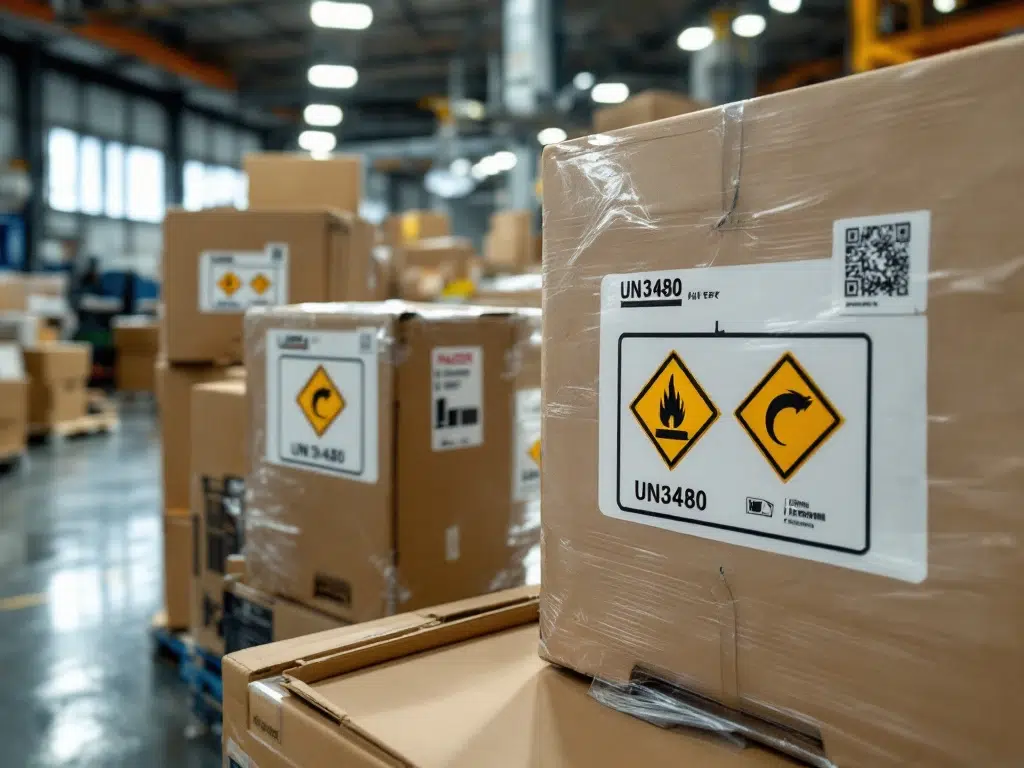
Transporting lithium-ion batteries in defense environments presents unique challenges that go far beyond standard logistical considerations. From military drones to sensitive communications systems, the power sources powering your defense equipment require specialized packaging solutions that meet strict safety and military standards. These batteries can pose a fire hazard if handled improperly, while extreme operational conditions such as temperature fluctuations, shock and vibration place additional demands on protection. In this article, you’ll discover which packaging solutions provide optimal safety for lithium-ion batteries in defense applications, from UN3480 regulations to practical implementation in your logistics processes.
Why specialized packaging is crucial for defense batteries
Lithium-ion batteries in defense applications operate in conditions that commercial batteries rarely experience. Military drones and other defense equipment are deployed in extreme temperatures, from arctic cold to desert heat, where temperature swings of more than 60 degrees Celsius are no exception.
Fire hazard poses the most critical challenge. Lithium-ion batteries can go into thermal runaway if damaged, overcharged or exposed to extreme temperatures. This process leads to uncontrollable heat generation, toxic gas fumes and, in the worst cases, fire or explosion. For defense personnel who depend on reliable equipment, this can pose life-threatening situations.
In addition, defense batteries experience mechanical stress due to:
- Shocks and vibrations during transport in military vehicles
- Falls or bumps during rapid deployment in the field
- Exposure to moisture, dust and corrosive environments
- Pressure changes during air transport of equipment
These challenges highlight why standard consumer packaging is inadequate for defense applications. Your batteries need protection specifically designed for the demanding conditions in which defense equipment must operate.
UN3480 and MIL-STAN requirements for lithium-ion transportation
The transportation of lithium-ion batteries is governed by strict international regulations, with UN3480 providing the basis for all transportation requirements. This UN classification treats lithium-ion batteries as dangerous goods and sets specific requirements for packaging, marking and documentation.
For defense applications, additional MIL-STAN (Military Standard) certifications apply beyond civilian standards:
| Standard |
Application |
Main requirements |
| UN3480 |
General transport |
Leakproof packaging, shock absorption, temperature resistance |
| MIL-STD-810 |
Environmental testing |
Vibration, shock and temperature tests under extreme conditions |
| MIL-STD-461 |
EMC requirements |
Electromagnetic compatibility and interference protection |
| IP67 |
Degree of protection |
Fully dustproof and waterproof to a depth of 1 meter |
UN3480 regulations require packaging to be tested for drop protection from 1.2 meters and to withstand pressure changes that occur during air transport. For defense applications, these requirements are often tightened, testing fall protection from 2 meters and higher pressure differentials.
MIL-STAN certifications ensure that your battery packs are not only safe, but also function under the extreme conditions characteristic of military operations. These standards cover aspectos such as corrosion resistance, fungus growth and salt spray exposure.
Which packaging types provide optimal protection for military batteries
Several packaging solutions are available for defense applications, each with specific advantages for different scenarios. The choice depends on factors such as battery size, transportation mode and operational requirements.
Flight cases for rugged protection
Flightcases are the gold standard for transporting sensitive defense equipment. These transport cases provide excellent protection against shock, vibration and environmental influences. For lithium-ion batteries, flight cases are often equipped with:
- Fire retardant foam interiors that individually enclose batteries
- Pressure ventilation systems for gas evacuation during thermal runaway
- Conductive foam for ESD (electrostatic discharge) protection
- Temperature indicators for monitoring during transport
Specialized drone cases
Customized drone cases have been developed for defense drones and new drones defense applications. These transport case drone solutions integrate battery storage with drone protection and provide space for spare batteries, chargers and accessories in one compact unit.
Rack systems for large volumes
When transporting multiple batteries simultaneously, rack systems offer efficient solutions. These systems can be placed in standard military containers and contain individual compartments for each battery, including mechanical insulation to prevent domino effects in the event of thermal runaway.
IP67 protected containers
For extreme environments where complete water and dust proofing is required, IP67 certified containers provide optimal protection. These containers are essential for maritime operations, desert missions and other environments where moisture or dust can be fatal to battery performance.
Material specifications and sustainability in defense packaging
Material selection for defense battery packaging goes beyond mechanical protection. Each material must meet specific requirements for fire safety, corrosion resistance and durability.
Fire retardant materials form the basis of safe battery packaging. Polyethylene and polypropylene foams with fire-retardant additives provide excellent shock absorption while slowing flame spread. For extreme applications, ceramic coatings that can withstand temperatures up to 1,000°C are used.
Corrosion resistance is crucial for long packaging life. Aluminum alloys with anodization treatment offer excellent strength-to-weight ratio and resistance to saltwater and chemical exposure. Stainless steel structures are used for even harsher conditions.
Circular packaging principles
Sustainability in defense packaging also includes reusability and reparability. Modern defense packaging is designed according to circular principles:
- Modular construction for easy repair and part replacement
- Reusable foam interiors that can be adapted for different battery sizes
- Tracking systems for monitoring packaging location and condition
- Refurbishment programs for life extension
This approach not only reduces environmental impact, but also lowers the total cost of ownership for defense organizations by allowing packaging to be used intensively for several years.
Practical implementation and logistical considerations
The transition to specialized lithium-ion packaging requires a structured approach that includes technical, operational and training aspects.
Selection criteria for packaging solutions
Several factors are important when choosing the right packaging solution for your defense applications:
- Battery specifications: capacity, dimensions, weight and energy density
- Transport mode: land transport, aviation or maritime transport
- Operating environment: temperature range, humidity and mechanical load
- Logistics requirements: stackability, handling and storage efficiency
For custom industrial packaging, it is essential that each solution be specifically tailored to your unique requirements. Standard solutions rarely meet the complex combination of requirements posed by defense applications.
Training and operational procedures
Proper use of specialized battery packs requires training of personnel in:
- Battery damage recognition and safety indicators
- Proper packing procedures and foam positioning
- Emergency procedures for thermal runaway signals
- Documentation and traceability requirements
In addition, operational procedures must be integrated into existing logistics processes, including tracking of packing locations, maintenance schedules and replacement of wear parts.
Implementing advanced lithium-ion packaging solutions in defense logistics requires expertise in both battery safety and military standards. By choosing customized solutions that meet UN3480 and MIL-STAN requirements, you not only ensure the safety of your personnel and equipment, but also optimize the operational readiness of critical defense systems. The investment in specialized packaging pays off through reduced downtime, lower replacement costs and increased mission reliability of your lithium-ion powered defense equipment.
How long does it take to train personnel to use specialized lithium-ion packaging?
Basic training for defense personnel usually lasts 1-2 days and includes hands-on exercises covering packing procedures, safety protocols and emergency procedures. For executives and logistics specialists, a more extensive 3-5 day training is recommended that also covers maintenance, tracking systems and regulations.
What is the cost of MIL-STAN certified packaging compared to standard UN3480 solutions?
MIL-STAN certified packaging typically costs 40-60% more than standard UN3480 solutions, but offers significantly longer service life and better protection. The additional cost is usually recovered within 2-3 years through reduced battery damage and lower defense equipment replacement costs.
How do you recognize signs of thermal runaway during transport and what should you do?
Warning signals include unusual heat development, battery swelling, chemical odors or smoke. At these signals, immediately stop the transport vehicle, move the package to a safe, open location, alert firefighters and evacuate the area. Never use water on lithium-ion fires – only special Li-ion fire extinguishers are effective.
Can existing flight cases be adapted for lithium-ion transport or is new equipment required?
Existing flight cases can often be upgraded with fire retardant foam, pressure ventilation systems and temperature indicators. However, a safety inspection by a certified specialist is essential to determine if the case structure is suitable for lithium-ion transport according to UN3480 standards.
What documentation is required when transporting defense lithium-ion batteries?
Required documentation includes UN3480 shipping documents, battery specifications and safety data sheets, MIL-STAN certificates of packaging, and logbooks with temperature and shock records. Additional customs documents and export licenses are often required for international shipments.
How often should specialized battery packs be inspected and maintained?
Visual inspections should be made before each use, looking for cracks, damaged fasteners and foam condition. Thorough technical inspections are required every 6 months, including pressure testing of seals and checking ventilation systems. Foam interiors should usually be replaced annually depending on intensity of use.
What is the best approach for storing multiple lithium-ion packs in a defense warehouse?
Storage locations should be temperature-controlled (15-25°C), well ventilated and equipped with Li-ion fire detection. Packages should be at least 2 meters apart to prevent domino effects, and there should be 24/7 monitoring. Use a FIFO (first-in-first-out) system and track battery age for optimal rotation.