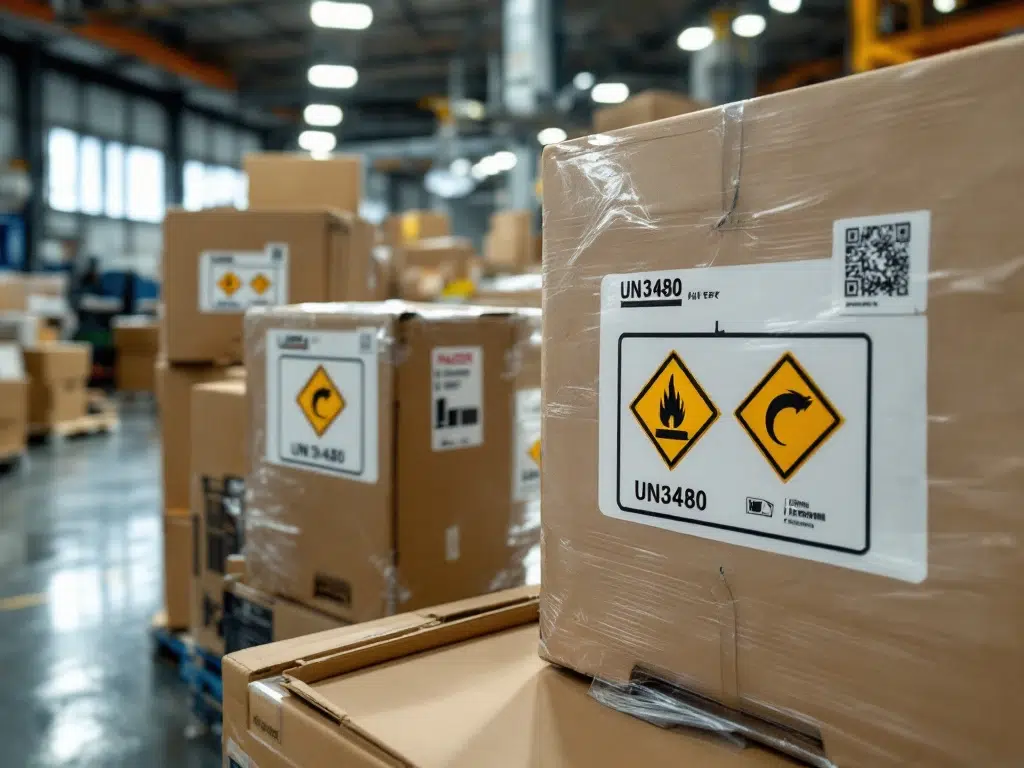
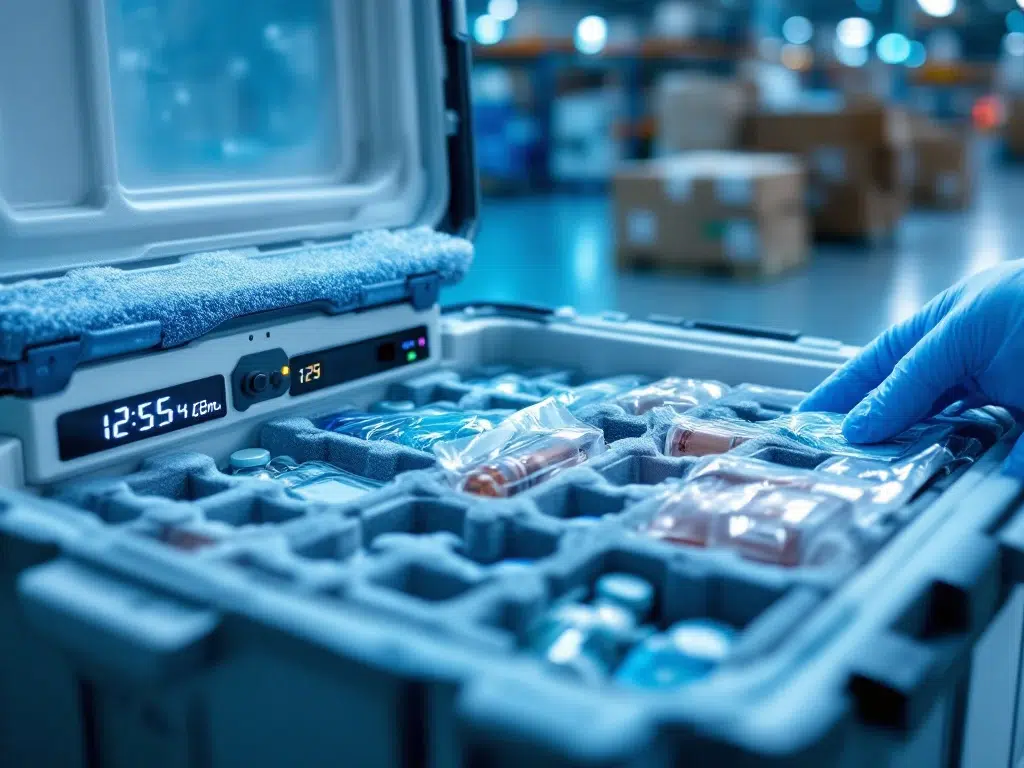
Pharmaceutical cold chain validation is essential for ensuring the quality and efficacy of temperature-sensitive medications during transport and storage. It encompasses a series of tests and procedures that ensure medicines remain within specific temperature zones. For pharmaceutical companies, thorough validation is not only a legal obligation according to GDP (Good Distribution Practice) guidelines, but also crucial for guaranteeing patient safety and preventing costly product losses.
What exactly does pharmaceutical cold chain validation involve?
Pharmaceutical cold chain validation is a systematic process that demonstrates temperature-sensitive medications are transported and stored under controlled conditions. The goal is to prove that the temperature of pharmaceutical products remains within prescribed limits throughout the entire distribution chain.
The validation consists of several phases:
- Design Qualification (DQ): Assessment of whether the transport system design meets the requirements
- Installation Qualification (IQ): Verification that all equipment is correctly installed
- Operational Qualification (OQ): Testing whether the system functions as intended under various conditions
- Performance Qualification (PQ): Evaluation of the system’s performance in practice
This validation is not a one-time event but a continuous process. It ensures pharmaceutical products maintain their efficacy during transport, which is essential for both patient safety and compliance with legal regulations. Additionally, it helps identify weaknesses in the cold chain, allowing improvements to be implemented.
Which temperature parameters must be validated for medication transport?
When validating temperature parameters for medication transport, several critical zones must be checked, depending on the type of medicine. The most common temperature zones are:
- Frozen products: Below -20°C
- Refrigerated products: 2°C to 8°C (most common for biological medicines and vaccines)
- Controlled Room Temperature (CRT): 15°C to 25°C
- Special categories: Some products require specific temperature zones such as 8°C to 15°C
For each type of medicine, acceptable deviations apply, often referred to as ‘excursions’. These are typically defined in stability studies and may include, for example, that a product can be outside the ideal temperature zone for a maximum of 24 hours, as long as it remains within a broader temperature margin.
For thorough validation, temperature mapping is essential. This involves placing temperature sensors at various locations in the packaging or transport vehicle to identify ‘hot spots’ and ‘cold spots’. This helps you understand how temperature behaves during transport and where potential risks lie.
During validation, you must also consider:
- Seasonal variations (summer vs. winter)
- Different transport routes and modes
- Loading and unloading processes
- Storage at intermediate locations
How is transport qualification conducted for temperature-sensitive pharmaceuticals?
Transport qualification for temperature-sensitive pharmaceuticals follows a structured process that begins with a thorough risk assessment. This involves mapping all possible factors that can influence temperature during transport, such as exposure to extreme weather conditions, transport duration, and transfer points.
After the risk assessment, you develop test protocols specific to your transport routes and products. These protocols include:
- Test routes that are representative of actual transport routes
- Test conditions that simulate seasonal extremes
- Monitoring equipment for accurate temperature recording
- Clear acceptance criteria
For the actual validation, various methods are used:
- Worst-case scenario testing: This involves testing under the most challenging conditions, such as extreme temperatures or longer transport times than normal.
- Seasonal validation: Tests are conducted in different seasons to cover variations in ambient temperature.
- Transport vehicle qualification: Each type of transport vehicle (truck, airplane, ship) is validated separately due to the different temperature challenges.
An important aspect of transport qualification is testing the packaging solutions themselves. Passive cooling systems such as insulation materials, cooling elements, and specialized packaging must be validated to prove they can maintain the required temperature for the expected transport duration, plus a safety margin.
What documentation is required for cold chain validation in the pharmaceutical sector?
For complete cold chain validation in the pharmaceutical sector, extensive documentation is necessary. This documentation not only serves as evidence of compliance with GDP guidelines but also as a reference during audits and inspections. The key documents are:
- Validation plan: An overarching document describing the validation strategy, responsibilities, timelines, and acceptance criteria.
- Risk assessment: Identification and evaluation of all potential risks in the cold chain.
- Test protocols: Detailed descriptions of how each test should be performed, including methodology and acceptance criteria.
- Test results: All data collected during validation tests, including temperature logs.
- Deviation reports: Documentation of any deviations from the acceptance criteria, with analysis and corrective measures.
- Validation report: A summary of all test results and conclusions.
- Certificates: Evidence that equipment, such as temperature loggers, is calibrated according to required standards.
All documents must comply with GDP guidelines and other relevant regulations such as those from the European Medicines Agency (EMA) or the US Food and Drug Administration (FDA). The documentation must be clear, complete, and traceable, with signatures from authorized persons and date entries.
Additionally, you need to ensure:
- Standard operating procedures (SOPs) for all aspects of cold chain management
- Training documentation for personnel involved in the cold chain
- Qualification documents for all equipment and systems used
When should revalidation occur for pharmaceutical transport routes?
Revalidation of pharmaceutical transport routes is an essential component of a robust cold chain management system. There are various circumstances that necessitate revalidation:
- Changes in transport routes: When new destinations are added or existing routes change, this can affect exposure to different climate conditions.
- Change of transport mode: Switching from road transport to air transport or vice versa requires revalidation due to different temperature challenges.
- Adjustments in packaging materials: Any change in insulation materials, cooling elements, or packaging configuration can affect thermal performance.
- Changes in cooling systems: New or modified active or passive cooling systems must be revalidated.
- Seasonal revalidation: For critical routes or products, periodic revalidation in different seasons is recommended, usually annually for summer and winter conditions.
- After significant temperature deviations: If serious temperature excursions have been detected during transport, this may indicate problems requiring revalidation.
- Changes in regulations: New or modified GDP guidelines may impose additional validation requirements.
It’s important to have a formal change management process that assesses whether changes require revalidation. Not every minor change necessitates complete revalidation; sometimes a risk assessment or limited test is sufficient.
For an effective revalidation strategy, it’s advisable to conduct an annual evaluation of the cold chain system, assessing whether there have been changes that require revalidation.
Conclusion
Pharmaceutical cold chain validation is a complex but essential process to ensure the integrity of temperature-sensitive medications. By following a systematic approach to validation, documentation, and revalidation, you ensure that medicines remain safe and effective throughout the entire transport process.
For companies in the pharmaceutical sector, it’s important to invest in robust packaging solutions that can withstand temperature fluctuations and meet all validation requirements. Learn more about specialized packaging solutions that are also applied in other demanding sectors such as defense, where protection against external influences is equally crucial.
With the right validation processes, documentation, and packaging solutions, you can not only comply with GDP guidelines but also guarantee the quality of your products and prevent costly product losses.
Frequently Asked Questions
What are the most common errors in cold chain validation and how can these be prevented?
The most common errors are insufficient temperature mapping (too few measurement points), ignoring seasonal effects, and inadequate risk analysis of transfer points. Prevent these by creating a detailed validation plan, testing worst-case scenarios, and identifying all critical points in the distribution chain. Also ensure well-trained personnel who understand the importance of temperature control and regularly conduct audits to ensure compliance.
How can we control the costs of cold chain validation without compromising quality?
Control costs by applying a risk-based approach that prioritizes the most critical routes and products. Consider pooling validation tests for similar routes or products. Invest in high-quality, reusable packaging solutions that require less frequent revalidation. Utilize simulation software for initial tests before conducting expensive practical tests. A well-planned validation program prevents costly repetitions and product losses.
What technological innovations improve the reliability of cold chain validation?
Recent innovations include IoT sensors that transmit real-time temperature data, blockchain technology for irrefutable temperature records, and AI-driven prediction models that can anticipate temperature deviations before they become critical. Advanced thermal simulation software enables accurate predictions of how packaging performs under various conditions. Additionally, new phase-change materials (PCMs) provide more stable temperature control than traditional cooling elements.
How do you handle temperature deviations detected during transport?
When detecting temperature deviations, first quarantine the products and assess the severity of the deviation (duration, degree of excursion). Consult the product's stability studies to determine if the deviation is acceptable. Conduct a thorough investigation into the cause and document this in a deviation report. Implement corrective and preventive actions (CAPA) and evaluate whether revalidation of the route or packaging is necessary. Ensure a clear escalation protocol so staff know who to inform in case of deviations.