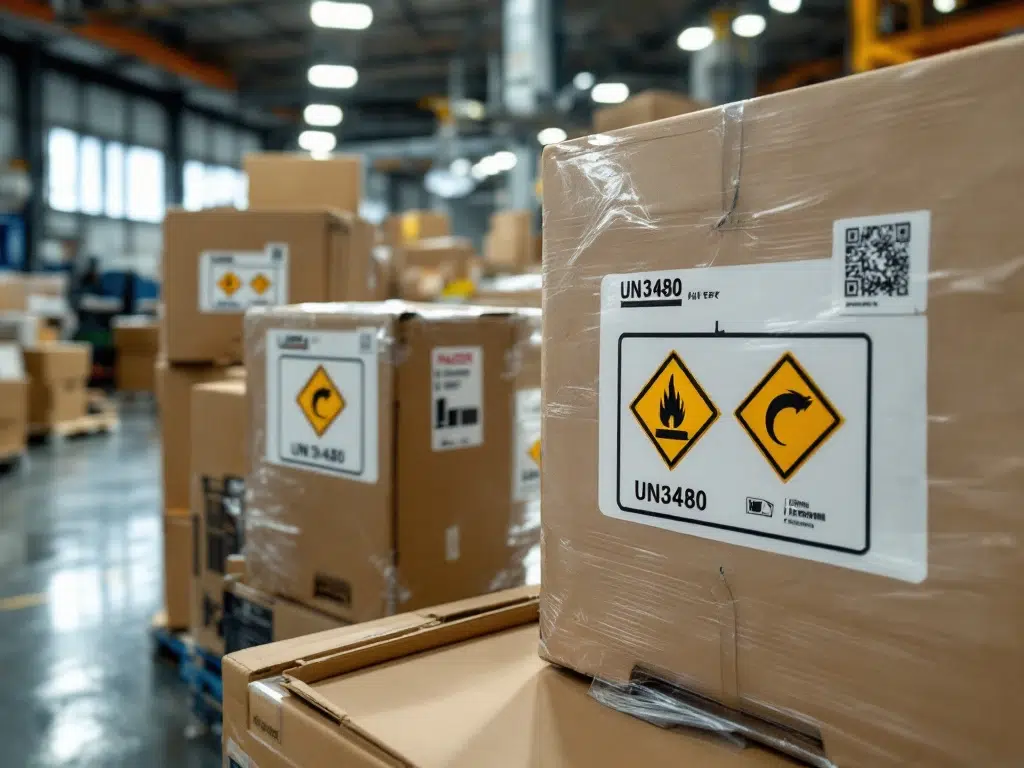
Batteries are essential components in many modern devices, but they also pose specific risks during transport and storage. That’s why there are strict regulations for battery packaging, with insulation materials playing a crucial role. The right insulation materials protect against short circuits, thermal runaway, and chemical leaks. In this article, we discuss which insulation materials are required for battery packaging, why they are necessary, and how to comply with international safety regulations.
Why is insulation mandatory for battery packaging?
Insulation in battery packaging is not just a recommendation, but a legal requirement due to the significant safety risks that batteries pose. Batteries contain chemical energy that can be released uncontrollably under certain conditions, potentially resulting in dangerous situations.
The main risks that insulation protects against are:
- Short circuit: When the positive and negative terminals of a battery make direct contact, this can lead to extreme heat, fire, or even explosions. This risk is especially high with lithium-ion batteries used in drones, communication equipment, and other advanced devices.
- Thermal runaway: If one cell overheats, it can cause a chain reaction where neighboring cells also overheat. Good insulation prevents the spread of heat.
- Chemical leakage: Batteries contain corrosive substances that can damage equipment, transport vehicles, and the environment if they leak.
The legal basis for these insulation requirements lies in international transport regulations such as the UN recommendations for the transport of dangerous goods, IATA regulations for air transport, and ADR regulations for road transport. This regulation has been translated into national legislation in virtually all countries.
Failure to comply with these regulations can lead to:
- Rejection of shipments by carriers
- Heavy fines and legal liability
- Damage to your company’s reputation
- In the worst case: accidents resulting in personal injury or property damage
Which insulation materials meet UN packaging requirements for batteries?
For safely packaging batteries, specific insulation materials are required that comply with UN certifications and international transport regulations. The right choice depends on the type of battery and application, but the following materials are generally recognized as UN-certified insulation materials:
Non-conductive materials
- Vermiculite: A mineral insulation material that excellently absorbs heat and is non-conductive. It is often used in powder form to completely encase batteries during transport.
- Fiberglass: Heat-resistant and electrically insulating, ideal for batteries that may be used at high temperatures.
- Ceramic fibers: Provide superior thermal insulation and withstand extreme temperatures, making them suitable for high-end applications in defense and security equipment.
Foam materials and custom solutions
- ESD foam (Electrostatic Discharge): Specially developed foam that dissipates static electricity without causing short circuits.
- PE foam (Polyethylene): Lightweight, water-resistant, and shock-absorbing, ideal for protecting batteries during transport.
- Custom foam interiors: Tailor-made foam interiors that fit precisely around the battery, preventing movement and ensuring insulation.
When selecting insulation materials, it’s important to consider the following properties:
- Fire resistance: The material must be flame-retardant and not contribute to the spread of fire.
- Electrical insulation: Absolute requirement to prevent short circuits.
- Shock absorption: Protects against physical impact during transport.
- Chemical resistance: Must be resistant to potential leakage of battery fluids.
- Temperature resistance: Must remain functional within the temperature range to which the packaging may be exposed.
For defense and security applications, often extra stringent requirements are placed on insulation materials, requiring them to meet specific MIL-STAN (military standard) certifications. These packages must be able to withstand extreme conditions while protecting sensitive equipment.
How do insulation requirements differ for various battery types?
The insulation requirements vary significantly by battery type due to their unique chemical compositions and risk profiles. Here’s an overview of the specific requirements per type:
Lithium-ion batteries
These batteries, commonly used in drones and modern communication equipment, have the strictest insulation requirements due to their high energy density and risk of thermal runaway.
- Requires fully enclosing, non-conductive packaging
- Individual protection of terminals is mandatory (usually with plastic caps or tape)
- Batteries must be separated from each other to prevent thermal runaway
- Packaging must comply with UN 3480/3481 specifications
- Additional restrictions apply for air transport regarding state of charge (max. 30%)
Nickel-metal hydride (NiMH) batteries
Less risky than lithium-ion, but still subject to specific insulation requirements:
- Requires non-conductive separation between batteries
- Less stringent requirements for terminal protection, but still recommended
- Packaging must comply with UN 3496 specifications
Lead-acid batteries
Heavy and containing corrosive acid, which brings specific insulation requirements:
- Leak-resistant packaging required
- Acid-resistant insulation materials necessary
- Packaging must be able to bear heavy loads
- Must comply with UN 2794/2795/2800 specifications
Alkaline batteries
Relatively safe, but still subject to basic regulations:
- Simple terminal protection to prevent short circuits
- Protection against leakage of alkaline fluid
- Usually no UN specification required for standard transport
The scientific reasons behind these differences lie in the chemical reactions that can occur during damage or overheating. Lithium-ion batteries, for example, can undergo a so-called “thermal runaway,” where the temperature rises exponentially. Lead-acid batteries, on the other hand, pose a risk primarily due to the corrosive sulfuric acid they contain.
What are the consequences of improper insulation in battery packaging?
The consequences of inadequate insulation in battery packaging can range from logistical delays to serious safety incidents. It’s important to understand these risks to give proper priority to correct packaging procedures.
Safety incidents
The most serious consequences are safety incidents that can lead to:
- Fire and explosions: Especially with lithium-ion batteries, short circuits can lead to extreme heat and even explosions.
- Chemical leaks: Corrosive substances can be released and cause damage to surrounding equipment, transport vehicles, and the environment.
- Personal injury: Workers in the logistics chain can be injured by these incidents.
There are several documented cases where improperly packaged batteries have led to fires in aircraft, trucks, and storage facilities.
Legal liability
In addition to the direct safety risks, there are also legal consequences:
- Liability for damage to third parties
- Fines for non-compliance with transport regulations (which can amount to tens of thousands of euros)
- Possible criminal prosecution in cases of serious negligence
Transport rejections and delays
Practical consequences for your business operations can include:
- Rejection of shipments by carriers
- Delays in the supply chain
- Additional costs for repackaging and new shipping
- Reputation damage with customers due to late deliveries
Common insulation errors
The most common errors in battery packaging are:
- Insufficient protection of battery terminals
- Use of conductive materials in the packaging
- Insufficient separation between individual batteries
- Inadequate protection against external impact
- Incorrect labeling and documentation
These errors are relatively easy to prevent by using professional packaging solutions specifically designed for batteries and complying with all relevant regulations.
Conclusion
The right insulation materials for battery packaging are not only a legal requirement but also essential for the safety of your products, personnel, and end users. Depending on the type of battery and application, different materials are required, ranging from vermiculite and fiberglass to specialized foams and custom foam interiors.
Compliance with UN packaging requirements and international transport regulations is crucial to prevent safety incidents, legal liability, and logistical problems. By investing in the right packaging solutions, you not only protect your products but also your company’s reputation.
At Faes, we understand the complex requirements for battery packaging, especially in demanding sectors such as defense, security, and high-tech. We develop custom packaging solutions that not only meet all relevant standards and certifications but are also practical in use and extend the life of your equipment.
Frequently Asked Questions
How should I package used or damaged batteries for transport?
Used or damaged batteries require extra precautions. For damaged batteries, use special safety containers with fire-resistant material and absorbent for any leakage. Each damaged battery must be individually packaged in a non-conductive inner packaging. For used but intact batteries, the same insulation requirements apply as for new batteries, but always check for signs of damage before packaging them.
What are the specific insulation requirements for shipping batteries by air?
Air transport has the strictest requirements. Lithium-ion batteries must be limited to 30% state of charge (SoC), individually insulated with non-conductive material, and packaged in UN-certified packaging. Each shipment must be accompanied by specific documentation, including a declaration of dangerous goods and a Class 9 Hazard label. Additionally, weight restrictions apply and some batteries may only be transported in cargo aircraft, not in passenger aircraft.
How can I test if my insulation material meets safety standards?
To check if your insulation material complies, you can perform a simple electrical conductivity test with a multimeter. The material should show a very high resistance. For official certification, however, you need to engage an accredited testing laboratory that can perform tests according to the UN Manual of Tests and Criteria. These tests include short-circuit tests, drop tests, and pressure resistance tests, among others. Only materials that pass these tests may be used in UN-certified packaging.