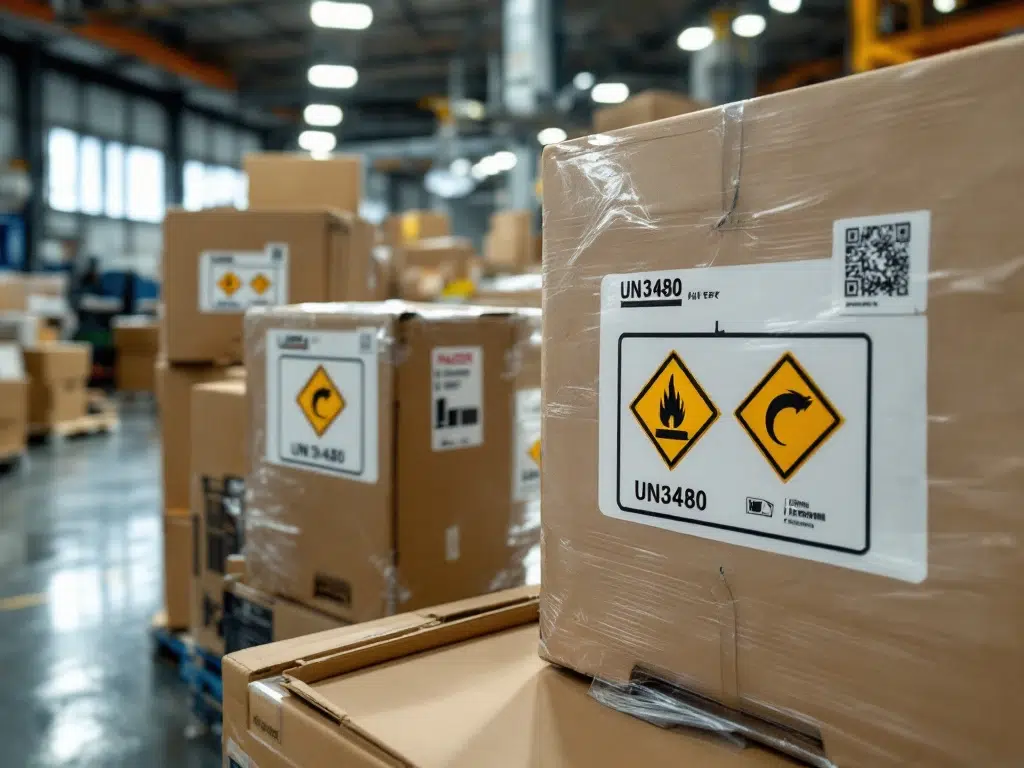
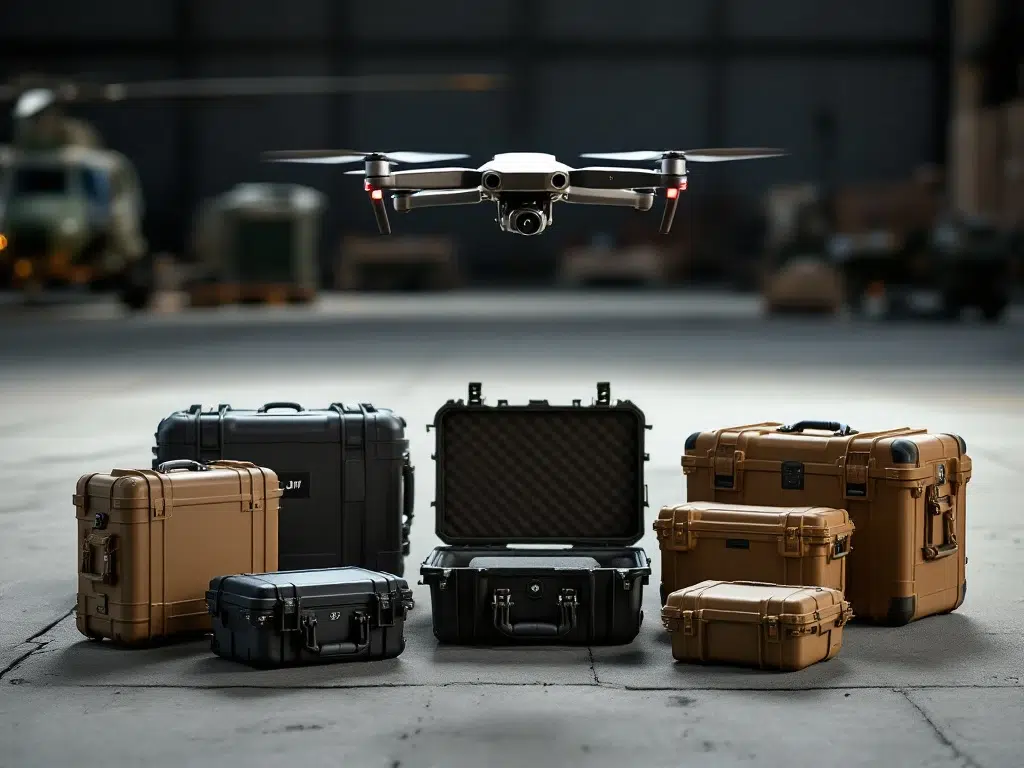
DJI drones are an important asset in military operations, but their sensitive technology requires optimal protection during transport. The right transport case is therefore essential for safely transporting this valuable equipment. These drones are deployed in challenging conditions where they are exposed to extreme temperatures, moisture, dust, and shocks. A suitable transport case not only protects against physical damage but also ensures that the drone is immediately deployable when needed.
Which transport cases offer optimal protection for DJI military drones?
For optimal protection of DJI military drones, robust transport cases are needed that are specifically designed to withstand extreme conditions. The most suitable cases combine high-quality materials such as impact-resistant plastic or aluminum with advanced protective properties.
Cases with IP67 or IP68 certification offer the best waterproof protection, which is crucial during operations in rainy or humid environments. These certifications guarantee that the case is completely dust and waterproof, even during temporary submersion.
Besides waterproofing, shock absorption is an essential property. High-quality transport cases contain multiple layers of shock absorption, often in the form of specially designed foam interiors. These interiors are custom-made for specific DJI drone models, ensuring that each component fits perfectly and is protected against vibrations and impacts during transport.
Another important feature is pressure regulation. Cases equipped with automatic pressure valves ensure that internal pressure is adjusted during altitude changes, which is essential for air transport or use in mountainous areas. This prevents the case from becoming difficult to open or drawing in air that may contain moisture.
For military applications, cases with UV resistance and corrosion resistance are important, as drones are often deployed in areas with intense solar radiation or saline environments such as coastal regions.
What are the requirements for transport cases in military drone use?
Transport cases for military drones must meet stringent requirements and certifications to be suitable for defense applications. The primary requirement is conformity with military standards, particularly the MIL-STD-810 standard, which tests resistance to environmental factors such as temperature fluctuations, moisture, shocks, and vibrations.
Material strength is crucial – cases must be made of high-quality materials that can withstand impact and compression. Many military transport cases are manufactured from reinforced polymer or lightweight aluminum that is both durable and practical for field operations.
Temperature resistance is another essential property. Military drone equipment must function in temperatures ranging from extreme cold to intense heat. Transport cases must be able to withstand these temperatures without deformation or degradation of their protective properties, typically in a range from -40°C to +80°C.
Security options such as lockable closures and sealing capabilities are necessary to prevent unauthorized access. This is especially important for drones with sensitive technology or those used in covert operations.
Additionally, cases for military drones often need to comply with UN, NEN, and ISO certifications relevant to defense applications. These standards ensure that the packaging meets international standards for quality and safety.
Ergonomics is equally important – the case must be equipped with sturdy handles, possibly wheels for larger models, and a design that allows stacking during storage and transport. This increases mobility and efficiency in the field where rapid deployment is often crucial.
How do you choose the right size transport case for DJI military drones?
Selecting the right size transport case for DJI military drones begins with precisely determining the dimensions of your specific drone model including all accessories. For smaller models such as the DJI Mavic series, a compact case is usually sufficient, while larger professional drones such as the DJI Matrice or Inspire series require considerably more space.
A good starting point is to calculate at least 2-5 cm of extra space around the drone for adequate protection. Consider all components you want to include: the drone itself, controllers, extra batteries, chargers, spare propellers, and any specific mission equipment.
When choosing a case, it’s important to pay attention to the internal configuration options. The best cases offer customizable foam interiors that can be cut to fit your specific equipment. This ensures that each component has its own protected compartment, which prevents movement during transport and enables quick inventory.
For military applications, it’s often necessary to consider modular storage options. This means that the internal layout can be adapted to different mission requirements. Some operations, for example, require additional sensors or specific payload options that need to be carried.
Also consider the transport method: will the drone primarily be carried manually, transported by vehicle, or does it need to be aircraft-friendly? This influences the choice of handles, wheels, and overall robustness of the case.
For extended missions or operations in remote areas, it may be advisable to choose a slightly larger case that provides space for additional accessories or spare parts, so you’re prepared for unforeseen circumstances in the field.
Which brands offer specialized cases for military DJI drones?
There are several leading brands that produce specialized transport cases that meet the stringent requirements for military DJI drone equipment. SKB Cases is known for their exceptionally durable cases that meet military specifications. As an official European distributor, they offer solutions specifically designed for defense applications, with excellent shock resistance and waterproof properties.
Pelican is another prominent manufacturer known for their high-quality protective cases. Their Pelican Air and Pelican Storm series are particularly popular for drone equipment in defense applications due to their lightweight construction combined with extreme durability. They offer advanced pressure ventilation and are tested according to military standards.
Nanuk also produces robust transport cases that excel in extreme conditions. Their cases are available with NK-7 resin shells that resist impact and are equipped with PowerClaw locking systems that provide extra security during transport.
For specific military applications, Peli-Hardigg offers solutions designed for the harshest conditions. Their cases are often found in military operations worldwide and provide superior protection against shocks, vibrations, and extreme temperatures.
In addition to these major brands, there are specialized suppliers that develop custom-made solutions for specific drone models and military requirements. This customized approach ensures that the transport case perfectly matches the specific requirements of the mission and the equipment used.
When choosing between these brands, it’s important to pay attention to specific features such as certifications (particularly MIL-STD compliance), warranty terms, availability of spare parts, and options for adaptation to specific needs within defense applications.
Conclusion
Choosing the right transport case for DJI military drones is an important investment in the protection and operational readiness of your drone equipment. By paying attention to factors such as protective properties, military certifications, sizing, and selecting a reliable brand, you ensure that your valuable drone equipment arrives safely at its destination.
For defense organizations, it’s crucial to invest in transport solutions that not only meet the minimum requirements but also perform reliably under the most challenging conditions. The right case ensures that your drone is immediately deployable when needed, which can be vital in military operations.
At Faes, we understand the unique challenges of the defense sector. We develop packaging solutions that meet the highest requirements of defense organizations and protect your equipment under the most extreme conditions. With our expertise in military standards and certifications such as UN, NEN, ISO, and MIL-SPEC, we can help you find the optimal protection solution for your DJI drone equipment. Want to know more about our specialized approach for the defense sector? Read more about our defense solutions and discover how we can help you.
Frequently Asked Questions
How do I protect my DJI drone batteries during transport in extreme temperatures?
Lithium-ion batteries of DJI drones require special protection against extreme temperatures. Use transport cases with thermal insulation and temperature-regulating properties. Place batteries in special LiPo-safe bags within the case and ensure they are transported in a partially charged state (40-60%). In extreme cold, it is advisable to allow the case and batteries to reach room temperature before using the drone.
What are the aviation regulations for transporting DJI drones and their batteries?
For air transport of DJI drones, the batteries must comply with IATA regulations. This means that lithium-ion batteries usually need to be carried in hand luggage with a maximum capacity of 100Wh per battery. Batteries must be individually protected against short circuits and be in a partially charged state. Use a transport case that complies with TSA guidelines and ensure proper documentation, especially for military applications where additional security protocols may apply.
How can I customize my transport case for specific mission requirements?
For mission-specific customizations, you can work with modular foam inserts or pick-and-pluck foam that can be reconfigured. Consider using color-coding systems for quick identification of equipment and adding MOLLE-compatible attachment points for integration with other military equipment. For sensitive missions, cases with RFID blocking or EMP protection are available that can minimize electronic signatures and protect the drone from electronic interference.
What extra accessories are essential to include in my drone transport case for field operations?
For military field operations, some essential accessories include: extra propellers, a field kit with tools for emergency repairs, multiple batteries with chargers, high-capacity and high-speed SD cards, and a robust tablet/controller with protective case. Also consider including lens cleaning materials, a portable powerbank, anti-condensation agents for humid environments, and possibly a small solar charging panel for extended missions in remote areas.