Military personnel often need to carry heavy equipment during missions and training. The right weight limits are crucial for both operational effectiveness and the health of the soldier. Equipment that is too heavy can lead to reduced mobility and long-term health problems, while gear that is too light may not provide adequate protection or functionality. In this article, we discuss the official weight limits for military equipment, how these vary by mission and function, the health risks of overloading, and the optimal weight distribution for military packs.
What are the official weight limits for military equipment?
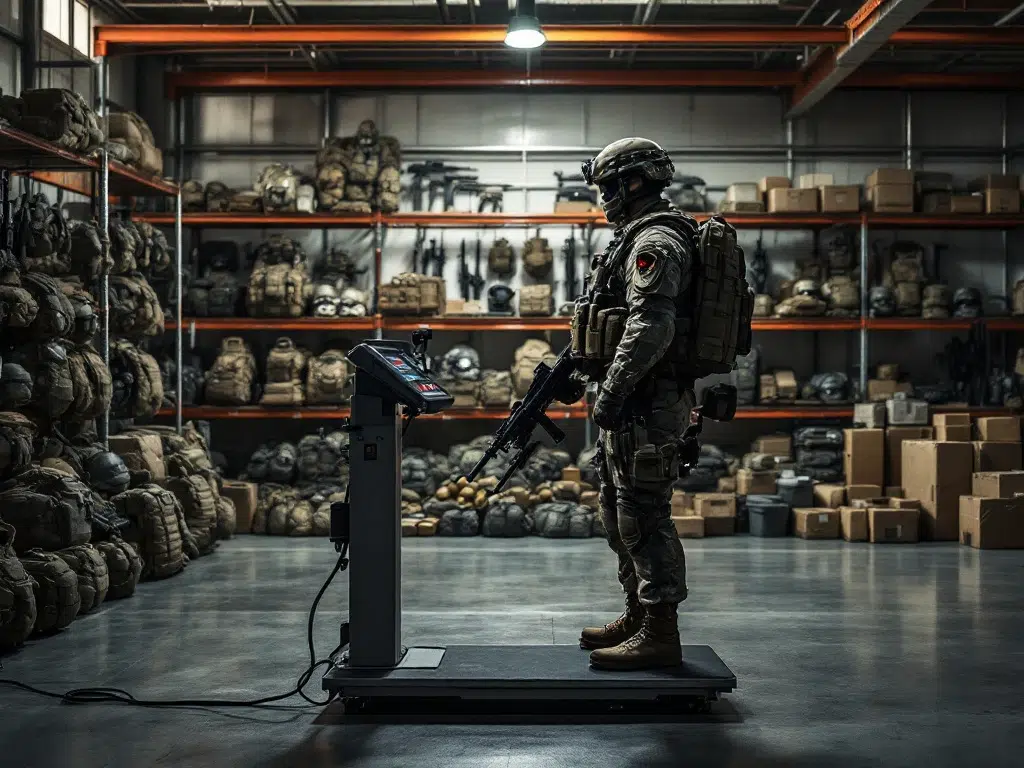
NATO’s guideline states that soldiers should not carry more than 30-33% of their body weight during standard operations. For an 80 kg soldier, this means a maximum load of approximately 24-26 kg. This guideline is based on extensive research into the impact of load on mobility and endurance.
The official limits are categorized as follows:
- Combat equipment: 15-20 kg (helmet, body armor, weapon, ammunition, and essential equipment)
- Marching order: 25-30 kg (combat equipment plus additional supplies for 24 hours)
- Approach march load: 30-40 kg (for longer missions without direct resupply)
- Emergency approach march load: 40-45 kg (absolute maximum for short periods)
National armies often have their own specific guidelines that may differ from these NATO standards, depending on their operational doctrines. The Dutch armed forces follow similar guidelines, taking into account the average physical characteristics of Dutch soldiers.
It is important to understand that these limits are established to find a balance between operational needs and physical limitations. Although the guidelines are clear, practical situations show that soldiers often carry more weight than recommended during certain operations, which can lead to problems.
How do weight limits vary by mission type and function?
The weight limits for military equipment are not universal for all situations. They vary significantly depending on various factors that directly influence what a soldier must be able to carry and for how long.
Different mission types have different limits:
- Reconnaissance operations: 20-25 kg maximum, priority is mobility and speed
- Standard infantry patrols: 25-35 kg, balance between equipment and mobility
- Extended missions in remote areas: 35-45 kg, including extra supplies
- Special forces operations: Variable, often lighter due to the need for speed and flexibility
Climate conditions have a major influence on weight limits:
- Desert environments: 10-15% lower weight limits due to additional strain from heat
- Arctic conditions: Extra weight from thermal protection layers, but often compensated by using sleds for equipment
- Mountainous terrain: 15-20% lower limits due to extra energy expenditure when climbing
Different expectations exist per function within the armed forces:
- Forward infantry: Often carries the heaviest loads (30-40 kg)
- Medical personnel: 25-35 kg, including medical equipment
- Communications specialists: 30-40 kg, due to additional communications equipment
- Support personnel: Typically lighter loads (15-25 kg)
When planning missions and assigning equipment, commanders ideally take these variables into account. In practice, however, this is not always possible, especially during unexpected situations or rapid deployment. Therefore, it is important that soldiers are well-trained to handle various weight loads.
What health effects do overloaded military backpacks have?
Carrying military equipment that is too heavy can pose significant health risks, both short and long term. Medical research has shown that overloading has a direct impact on soldiers’ bodies.
The most common acute health effects are:
- Muscle fatigue and cramps: Direct consequence of overloading, leading to reduced performance
- Blisters and skin irritations: From heavy equipment rubbing against the skin
- Increased risk of tripping and falling: Due to disturbed balance and reduced agility
- Heat-related conditions: Excessive weight increases the risk of overheating during exertion
In the longer term, chronic health problems can develop:
- Back problems and spinal deviations: One of the most reported long-term effects among veterans
- Knee problems: Degenerative joint conditions from repeated overloading
- Stress fractures: Especially in feet, ankles, and pelvis
- Nerve damage: From pressure on nerves, particularly in shoulders and back
Research has shown that soldiers who regularly carry more than 30% of their body weight have a significantly higher risk of these health problems. This affects not only the individual but also the operational effectiveness of the unit and long-term healthcare costs.
It is therefore important to find the balance between operational necessity and physical health. Modern armies are increasingly investing in lighter materials and smarter designs for equipment to reduce weight without losing functionality.
What is the optimal weight distribution for military packs?
Good weight distribution is at least as important as the total weight a soldier carries. The right distribution can increase effective carrying capacity and significantly reduce the risk of injuries.
The basic principles for optimal weight distribution are:
- Center of gravity close to the body: The closer the weight is to the spine, the less force is needed to carry it
- Highest weight concentration at mid-back level: Between the shoulder blades, not too high or too low
- Weight on the hips: 60-70% of the total weight should be carried by the hip belt
- Balanced distribution left and right: Uneven distribution leads to overcompensation and extra strain
For military backpacks, the following ideal arrangement applies:
- Bottom compartment: Heavy but not immediately needed items (sleeping bag, extra clothing)
- Middle compartment: Medium-weight items (food supply, cooking equipment)
- Top compartment: Lighter, frequently needed items (first aid kit, maps, snacks)
- Outer pockets: Only small, light items that need to be quickly accessible
Modern military backpack systems are designed with these principles in mind and offer various adjustment options. Adjustable shoulder straps, hip belts, and chest straps make it possible to perfectly adapt the backpack to individual body structure.
A well-designed and correctly adjusted backpack can significantly improve carrying comfort and increase effective carrying capacity by 15-20% without additional health risks.
Additional carrying methods for weight optimization
Besides the traditional backpack, supplementary systems are increasingly being used to better distribute weight:
- Modular combat vest systems: Distribute weight across the entire torso
- Integrated hydration systems: Water (one of the heaviest items) is carried close to the center of gravity
- Tactical hip belts: Transfer weight from shoulders to hips
By combining these methods, soldiers can carry the same equipment with less physical strain and a lower risk of injuries.
Conclusion
Respecting weight limits for military equipment is essential for both the health of soldiers and the effectiveness of operations. While the official guidelines are clear (maximum 30-33% of body weight), practical limits vary depending on mission, function, and environmental factors.
The health risks of overloading are significant and can lead to both acute and chronic problems. By paying attention to optimal weight distribution and utilizing modern carrying methods, the impact of heavy packs can be minimized.
At Faes we understand the unique challenges of defense organizations when it comes to safely transporting essential equipment. Our custom packaging solutions are designed to optimally protect military equipment while considering practical aspects such as weight and manageability in the field.
Frequently Asked Questions
How can I optimally pack my personal military equipment for weight distribution?
Start by creating a priority list of essential items. Place heavy items close to your back and at mid-back height. Distribute weight evenly between left and right, and use all available straps to secure the backpack tightly against your body. Test different configurations during training to discover what works best for your body type.
What are the first signs that my military pack is too heavy for my body?
Watch for tingling or numbness in shoulders, arms, or hands, indicating nerve compression. Other warning signs include excessive fatigue disproportionate to the effort exerted, unusual pain in the lower back or knees, and reduced mobility or response capability. When these symptoms occur, it's important to review your equipment and possibly lighten it.
How do I prepare my body for carrying heavy military equipment?
Build a training program that focuses on core stability, leg muscles, and back muscles. Combine strength training with endurance exercises where you gradually carry more weight. Specific exercises such as squats, deadlifts, and back extensions are particularly effective. Start with 30-60 minutes of walking with 10-15 kg and gradually build up until your training weight matches your operational load.