Safely packaging drone equipment for civilian flights requires professional packaging solutions that comply with strict aviation regulations. You need special attention to battery safety, protection of sensitive components, and compliance with IATA regulations. Proper packaging prevents damage, ensures safety, and facilitates smooth passage through airport security.
Why is proper packaging of drone equipment crucial for civilian flights?
Professional drone packaging is essential for safe air transport due to the complex safety risks associated with drone equipment. Drones contain sensitive electronic components, lithium-ion batteries, and precision instruments that can fail or pose safety risks without adequate protection.
The aviation industry has strict regulations for transporting electronic equipment. Insufficiently packaged drone equipment can lead to:
- Rejection by airlines
- Delays at security checkpoints
- Costly damage to delicate components
- Safety incidents due to battery problems
Additionally, good packaging protects your investment against mechanical shocks, temperature fluctuations, and humidity during transport. For professional applications, damaged equipment directly results in lost revenue.
What packaging requirements apply to drone equipment in civilian aviation?
Civilian aviation enforces IATA regulations that set specific requirements for transporting drone equipment. These rules vary depending on whether you’re carrying equipment as hand luggage or cargo.
For hand luggage, these restrictions apply:
- Maximum weight of 100Wh per lithium-ion battery
- Batteries must be removable and packaged separately
- Drone components must be well-secured against unintentional activation
- Sharp propellers require protective caps
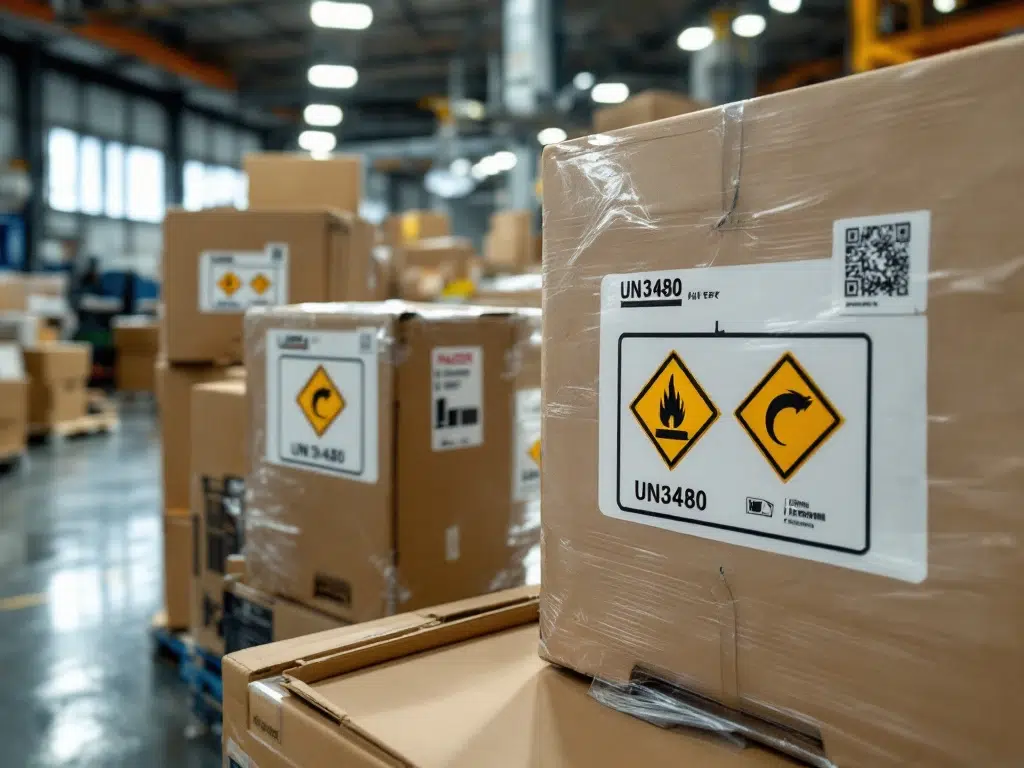
Additional requirements apply for cargo transport. Packaging must comply with UN specifications for dangerous goods, especially for batteries under UN3480 or UN3481 classification. Airlines may impose additional restrictions.
Documentation plays a crucial role. You often need a declaration about battery specifications, material composition, and safety certificates for your drone equipment.
How do you protect sensitive drone components during transport?
Sensitive drone components require multi-layered protection against mechanical impact, vibrations, and environmental influences. Cameras, gimbal systems, and sensors are particularly vulnerable to shocks.
Effective protection methods include:
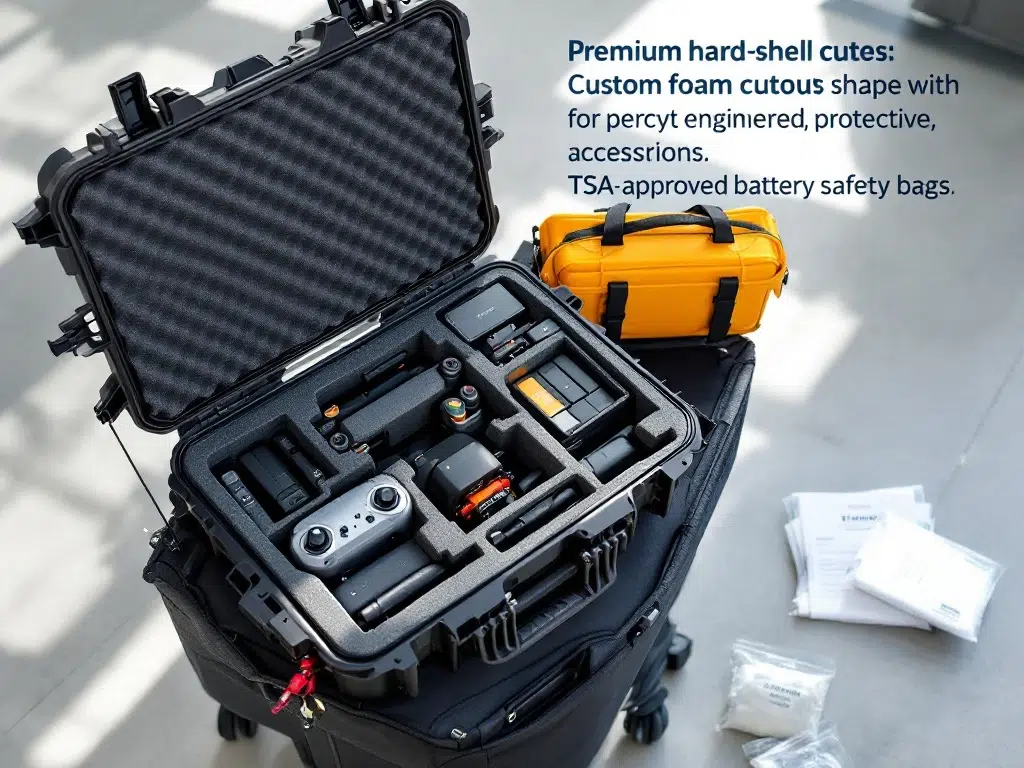
- Custom-cut foam inlays that completely enclose components
- Shock-absorbing materials around critical parts
- Separate compartments for different components
- Antistatic packaging for electronic components
Temperature control is crucial in extreme weather conditions. Insulating materials protect against sudden temperature changes in aircraft cargo holds. Moisture-absorbing packets prevent condensation that can cause electronic damage.
Professional drone logistics requires a systematic approach where each component has its own protected position. This prevents mutual damage and facilitates inspection by security personnel.
Which packaging materials are most suitable for drone equipment?
Flight cases offer the best protection for professional drone equipment thanks to their robust construction and customizable interiors. These industrial packaging solutions combine durability with practical functionality.
| Material |
Benefits |
Applications |
| Flight cases |
Maximum protection, reusable, professional appearance |
Complete drone systems, expensive equipment |
| Hard cases |
Waterproof, shock-resistant, relatively lightweight |
Compact drones, accessories |
| Foam inlays |
Perfect fit, shock absorption, cost-effective |
All drone components |
| Antistatic packaging |
ESD protection, transparent |
Electronic components, sensors |
For regular transport, investing in quality flight cases with custom-made foam interiors is the most cost-effective solution. These packages last for years and provide consistent protection.
Custom packaging solutions from specialized suppliers ensure optimal fit and protection. Defense-grade packaging solutions provide extra assurance for critical applications where failure is not an option.
How do you safely pack drone batteries for civilian flights?
Drone batteries pose the greatest safety risk during air transport and require strict packaging protocols according to UN3480 and UN3481 classifications. Lithium-ion batteries can cause fire or explosion if damaged.
Essential safety measures for battery packaging:
- Fully discharge batteries to 30% capacity for transport
- Individual protection against short circuits with insulation foil
- Use fireproof packaging containers
- Clear labeling with UN classification and warnings
Battery contacts must be covered to prevent unintended contact. Special battery boxes with flame-retardant properties provide extra safety. Damaged or swollen batteries should never be taken on aircraft.
Documentation for battery transport must include specifications such as capacity in Wh, number of cells, and safety certificates. Some airlines require prior approval for battery transport.
What are the key considerations for drone packaging for professional use?
Professional drone packaging requires a strategic approach that goes beyond mere protection. Companies that regularly transport drone equipment must consider cost-effectiveness, compliance, and operational efficiency.
Critical success factors include:
- Investment in reusable, durable packaging solutions
- Standardization of packaging procedures within the company
- Training employees in proper packaging techniques
- Documentation and compliance procedures for various destinations
Circular packaging principles are becoming increasingly important. Reusable flight cases and modular systems reduce waste and lower long-term costs. Tracking packages helps with management and maintenance.
For companies with frequent transports, investing in professional packaging systems that last for years is worthwhile. This ensures consistent protection, increases operational efficiency, and demonstrates professionalism to customers.
Successfully packaging drone equipment for civilian flights combines technical expertise with practical implementation. By investing in quality packaging solutions, following strict procedures, and ensuring compliance, you protect not only your equipment but also your business operations.
How do I know if my drone battery is allowed as carry-on luggage?
Check the capacity of your battery in Wh (watt-hours). Batteries up to 100Wh are allowed as carry-on luggage, provided they are removable and individually packaged. Batteries between 100-160Wh require prior permission from the airline. Always check the specific rules of your airline before traveling.
What should I do if my drone equipment arrives damaged after a flight?
Document the damage immediately with photos and report it directly to the airline at the airport. Keep all packaging materials and original documentation. Check if your travel insurance covers drone equipment and file a claim as soon as possible. Professional packaging helps demonstrate due care.
Can I use homemade foam inlays or should I buy professional packaging?
Homemade foam inlays may be adequate for occasional use, but professionally custom-cut foam offers superior protection and durability. For regular transport or expensive equipment, professional flight cases with precision foam are a better investment that prevents damage and ensures compliance.
What documentation do I need when bringing drone equipment on international flights?
Prepare a technical dossier with battery specifications (capacity, type, quantity), material declarations, CE certificates, and user manuals. Some countries require import permits or registration. Check the drone regulations of your destination country and contact the airline for specific requirements.