Contact

Companies often view Dead-on-Arrival (DOA) parts as an unfortunate side effect of their service process. A box damaged in transit, a part malfunctioning or a delivery arriving incomplete: annoying, but at first glance a matter of material cost. The reality is different.

Together with the University of Groningen, Faes has conducted extensive research into the actual impact of DOAs. This shows that on average the costs exceed the full value of the part itself. Not because the part is so expensive, but because the consequences affect the entire chain: extra service hours, urgent transports and increasing inventory costs.

Those who continue to view DOAs as isolated incidents underestimate the structural damage they cause. They are not a detail item, but a silent margin eater that puts pressure on service levels and unnecessarily strains the supply chain.

What is a DOA and why does it occur?

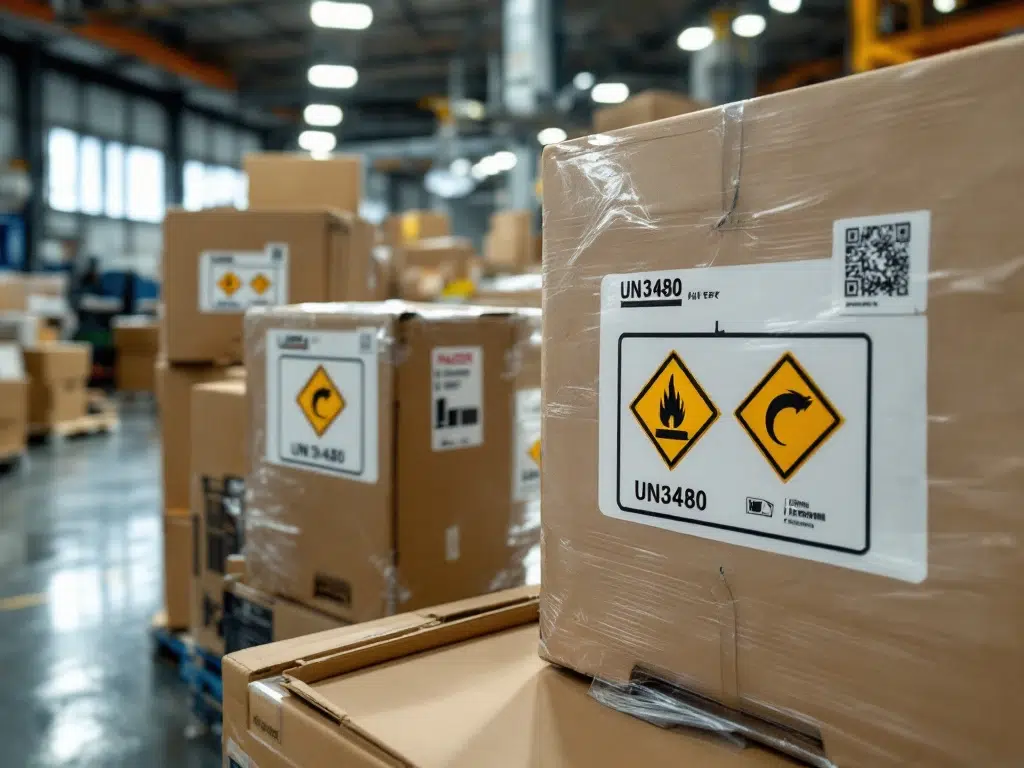
A Dead-on-Arrival is a service part that proves immediately unusable upon arrival. This can range from a defective circuit board to a cabinet with shipping damage or a delivery that is incomplete. The result is the same: The part cannot be deployed, and the customer’s outage continues longer.

The study shows that DOAs have three main causes in practice. First, logistics: damage due to transportation, storage or careless packaging. Second, the quality of the part itself: errors that were not revealed during testing. And finally, service quality: think errors during installation or parts that were delivered but misidentified.

For companies, DOAs often feel like fluke, but in reality they follow patterns. For example, we saw that one of the organizations surveyed was able to significantly reduce the number of logistical DOAs by drastically reducing the number of packaging variations. Less variation meant fewer errors and less damage. It shows that behind every DOA is a cause that can be addressed.

Cost item 1 – Parts and service hours

The first and most obvious cost of a DOA is the defective part itself. In many cases, attempts are made to repair the part, but the research shows that this is often more expensive than simply writing it off. In fact, many parts prove unsuccessful to repair, so the repair effort is mostly additional time and expense.

On top of that are the hours of Field Service Engineers (FSEs). Every DOA means that an engineer cannot complete his work and a new appointment is required. This not only costs travel time and labor costs, but also causes the end customer to experience longer downtime. The study shows that the use of FSEs averages about $300 per DOA. When these costs are added to the depreciation of the part itself, the damage cost quickly rises to more than the original value of the part. In the cases studied, the combined cost of scrap and service came to between 102 and 142 percent of the part value.

As a result, even before there is additional transportation or inventory pressure, a single DOA turns the balance sheet negative. Damage and service hours alone make it clear that a DOA is much more than a logistics incident and leads directly to margin loss.

Cost item 2 – Transportation

In addition to damage and service hours, transportation costs are a second major expense. Whereas a regular shipment costs about 150 euros on average, an expedited shipment can amount to about 1,200 euros. The study shows that for DOAs, express delivery is chosen much more often: in about 14 percent of cases, compared to only 4 percent for regular deliveries.

On top of that, defective parts usually have to be returned for repair or triage. This again generates additional transportation costs. All in all, this adds up to an average additional cost of about 491 euros per DOA, purely on transportation. Depending on the value of the part, this means an additional charge of 3 to 69 percent on top of the original part value.

Transportation costs thus appear to be a silent accelerator of overall DOA losses. Especially since the pressure to help customers quickly is great, emergency transports are often used automatically, even though they greatly increase the cost per DOA.

Cost item 3 – Inventory and availability

The third cost of a DOA is less visible, but at least as drastic in the long run: the impact on inventory management and availability. When parts regularly arrive defective, higher safety stock levels become necessary to guarantee service levels. That means additional capital investment, increased storage costs and a higher likelihood of obsolescence or depreciation of inventory.

The study shows that DOAs increase inventory costs by an average of 2.35 to nearly 10 percent per year, depending on demand frequency and part delivery times. Converted to the value per DOA, this amounts to an additional cost of 8 to 47 percent of the part value. This makes inventory a structural factor in the total cost of a DOA.

The problem is that these costs are rarely directly visible in reports. Yet they put noticeable pressure on margins, as inventory policies often have to be forced to change in order to meet SLAs. This creates a vicious cycle: higher DOA ratios lead to more inventory, more inventory leads to higher costs and a higher chance of waste.

The sum: why one DOA costs more than 100 percent

When the three cost items are added together, it becomes clear how big the impact really is. Damage and service hours already yield, on average, 102 to 142 percent of the part value. Transportation costs add 3 to 69 percent and inventory costs another 8 to 47 percent. The study shows that the total cost of a single DOA thus amounts to 135 to 219 percent of the original part value.

On an annual basis, this translates to a loss of nearly 4 percent of spare parts sales at the organizations surveyed. For companies with margins of 20 percent or less, this means that one out of every five euros of profit evaporates due to DOAs. This makes DOAs not incidents to be taken for granted, but structural margin killers that affect the entire chain.

How to address this

The numbers show that DOAs are much more than a matter of broken parts. They are a structural problem that slows down service processes, drives up costs and eats away at margins. The key lies in getting to the bottom of the causes behind each DOA. Without a systematic root cause analysis, it remains symptomatic.

The study shows that DOAs can often be traced to three areas: logistics, part quality and service quality. Those who look only at damage miss the underlying patterns that repeat themselves over and over again. Reducing packaging variations, tightening test procedures or improving instructions for field service engineers are only effective when it is clear which cause is the most significant in practice.

This is where Faes has a clear role to play. As an independent Fourth Party Packaging partner, we take charge of packaging management and help companies systematically analyze and address these causes. Thanks to our independent position, we can implement improvements without being tied to one supplier or choice of material. In doing so, we not only ensure a lower DOA ratio, but also predictability and control over overall costs.

Faes looks beyond the material. We use root cause analyses to map out where the real pain points are and translate those insights into structural improvements in the supply chain. In this way, DOAs change from an unavoidable cost item into a strategic point of leverage to make the supply chain more efficient and robust.

One DOA is never alone

A Dead-on-Arrival is not an incident, but a structural cost. The study shows that one DOA costs an average of 135 to 219 percent of the part value. Not by the material itself, but by the sum of service hours, emergency shipping and extra inventory.

Those who continue to view DOAs as coincidences let profits and customer satisfaction leak away unnoticed. Only a structural approach with root cause analysis makes it possible to eliminate the real causes.

Faes helps companies take that step. As an independent 4PP partner, we identify the causes and ensure that DOAs no longer eat up margins, but become opportunities to make the supply chain smarter and more robust.

Print
Email Download PDF