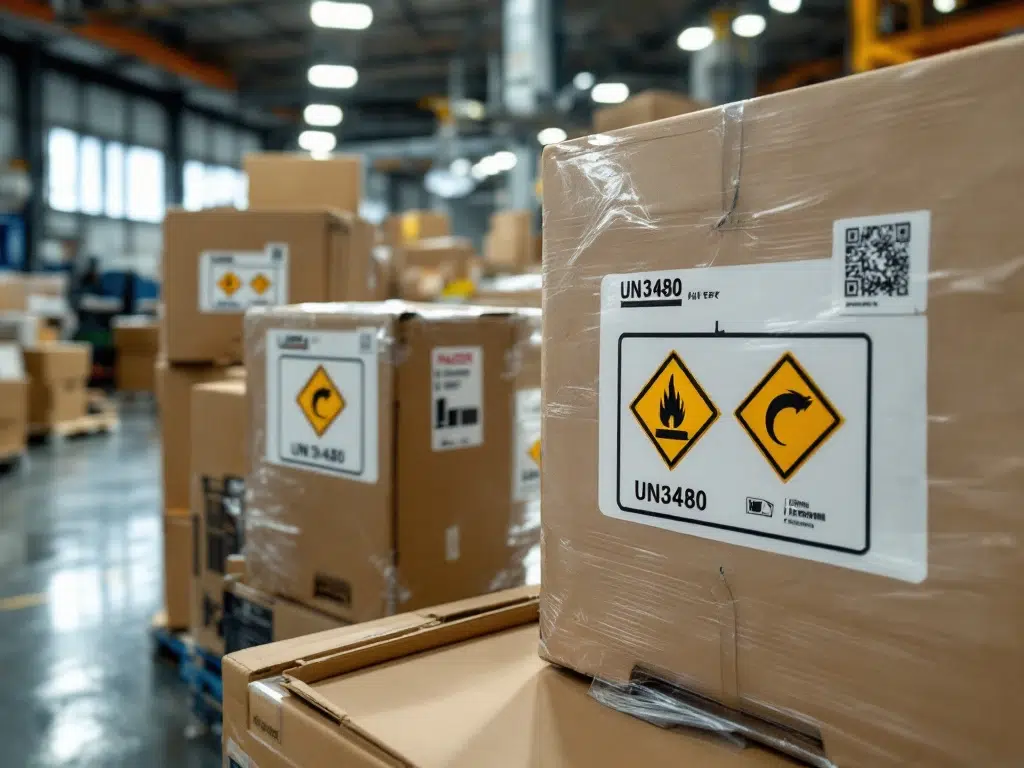
The defense sector is not about ordinary packaging. Military equipment, sensitive communications systems and mission-critical equipment require defense packaging solutions that can withstand extreme conditions and meet strict military standards. From drone transport to weapon systems, any kind of defense equipment needs specialized protection beyond standard industrial packaging.
This guide explores exactly what defense packaging solutions entail, what certifications are required and how specialized partners such as packaging experts develop custom solutions for defense organizations worldwide.
Why do defense organizations need specialized packaging solutions?
Defense organizations operate under conditions that commercial sectors rarely experience. Military packaging must withstand extreme temperature fluctuations, intense vibration during transportation and sudden shocks during air drops or rugged terrain.
The challenges in the defense sector are unique. Sensitive radar and communications equipment can be worth billions of dollars and is often irreplaceable during missions. A drone failure due to inadequate packaging can jeopardize operations. Therefore, defense organizations require packaging solutions that not only provide physical protection but also meet strict safety requirements.
Moreover, military equipment often needs to be quickly deployable. Packaging must therefore not only be robust, but also user-friendly. Quick access to equipment in critical situations can make the difference between mission success and failure.
What MIL-STAN certifications apply to defense packaging?
Military standards, known as MIL-STAN certification, are the backbone of defense packaging solutions. These certifications ensure that packaging performs under the most challenging conditions.
MIL-STD-810 is one of the most important standards for environmental testing. This standard tests packaging for resistance to temperature extremes, humidity, salt fog, vibration and shock. For defense organizations, this means keeping their equipment protected, whether in desert heat or arctic cold.
MIL-STD-461 specifically addresses electromagnetic interference (EMI) protection. Sensitive electronic equipment in military applications must not be interfered with by external electromagnetic fields. Packaging must therefore act as a Faraday cage to ensure signal integrity.
| MIL-STAN Standard |
Test area |
Application |
| MIL-STD-810 |
Environmental testing |
Temperature, humidity, vibration, shock |
| MIL-STD-461 |
EMI Protection |
Electromagnetic interference |
| MIL-STD-129 |
Marking |
Identification and traceability |
| MIL-STD-2073 |
Preservation |
Long-term storage and protection |
Types of defense packaging solutions for military equipment
The diversity of military equipment requires a wide range of specialized packaging solutions. Military flight cases form the basis for many defense applications. These rugged cases, often made of aluminum or composite materials, provide excellent impact and weather protection.
Specialized racks have been developed for communications systems that not only provide protection but also allow for quick installation. These 19-inch racks can house entire server rooms in a transportable form, complete with climate control and EMI shielding.
Drone transport cases are a growing segment within defense packaging solutions. These cases must not only protect the drone itself, but also provide space for batteries, controllers and spare parts. Modular foam interiors allow different drone configurations to be transported in the same case.
Specialized containers with multiple layers of security are being developed for sensitive weapons systems. These containers combine physical security with electronic access control and tracking systems for complete traceability.
Challenges in packaging sensitive defense equipment
Packaging sensitive defense equipment presents unique challenges beyond standard industrial applications. EMI shielding poses critical challenges, especially with electronic warfare systems and sensitive communications equipment.
Shock absorption requires advanced engineering. Military equipment must withstand G-forces that occur during air drops or transport over rough terrain. Traditional packing materials are often inadequate, requiring specialized damping materials and suspension systems.
Climate control presents another complex challenge. Defense equipment must operate in extreme climates, from tropical humidity to arctic cold. Packaging must therefore not only protect during transport, but also create climate-controlled environments for sensitive components.
Security risks play a crucial role in the design of defense packaging solutions. Classified equipment requires packaging with built-in security features, such as tamper detection and access control. Logistical complexity increases as many defense materials are subject to special transportation regulations.
How Faes defense develops customized packaging solutions
The development of defense packaging solutions requires a specialized approach that addresses the unique requirements of military applications. As a robust packaging specialist, Faes takes an end-to-end approach that begins at the engineering stage and continues through production and delivery.
The process starts with a thorough analysis of the equipment to be protected and the operational conditions in which it must operate. Dutch defense organizations and international military contractors gain access to specialized engineering expertise that takes into account MIL-STAN requirements and specific mission requirements.
With more than 35 years of experience in regulated industries, Faes combines traditional Dutch craftsmanship with innovative, sustainable packaging processes. This approach results in defense transportation solutions that not only meet military specifications, but also contribute to sustainable defense logistics.
Manufacturing capabilities include specialized flight cases, racks for communication systems and foam interiors that perfectly fit the contours of sensitive military hardware. Each solution is tested to relevant military standards to ensure performance under the most challenging conditions.
For defense organizations looking for reliable protection of their mission-critical equipment, this specialized approach provides assurance that their equipment will always remain operational regardless of the conditions in which it is deployed.
How long does it take to develop a custom defense packaging solution?
Development time for custom defense packaging ranges from 4-12 weeks, depending on complexity and MIL-STAN certification requirements. Simple flight cases can be completed within 4-6 weeks, while complex systems with EMI shielding and climate control may require 8-12 weeks. Urgent military needs can be expedited by mutual agreement.
What is the cost for MIL-STAN certification of defense packaging?
MIL-STAN certification costs vary by standard and test scope, typically between €5,000-€25,000 per certification. MIL-STD-810 environmental testing is typically more expensive than MIL-STD-129 marking testing. This investment is essential for defense contracts and is often recovered through the longer life and reliability of certified packaging.
Can existing commercial cases be adapted for military use?
While some high-quality commercial cases provide a good foundation, military applications usually require significant modifications or completely new designs. EMI shielding, shock absorption according to MIL-STD-810 and security features can rarely be effectively added to existing commercial products. Customization from scratch is usually more cost-effective.
How are defense packages maintained and repaired in the field?
Defense packs are designed for minimal maintenance with replaceable components such as latches, hinges and foam interiors. Standard repair kits contain commonly used parts and instructions for field maintenance. More complex repairs to EMI shielding or climate control usually require return to the manufacturer.
What documentation is required for export of defense packaging?
Export of defense packaging requires extensive documentation including material certificates, MIL-STAN test results and export licenses. Depending on the destination, ITAR (U.S.) or EU dual-use regulations may apply. Specialized packaging suppliers usually assist in obtaining proper export documentation and compliance.
How is the lifespan of defense packaging determined and monitored?
Service life is determined by accelerated aging tests according to MIL-STD-810 and real-world usage data. Modern defense cases often include RFID tags or sensors for tracking frequency of use, shock loads and environmental conditions. Preventive maintenance is scheduled based on this data, usually every 2-5 years depending on intensity of use.