Industrial custom packaging consists of tailor-made packaging solutions specifically developed for the unique protection, transport, and logistics needs of industrial products. These custom packaging solutions provide optimal protection for sensitive equipment and valuable materials where standard packaging falls short. From flight cases to transport crates and foam interiors, custom packaging is fully adapted to your exact specifications and requirements.
What is industrial custom packaging and why is it essential?
Industrial custom packaging refers to packaging solutions that are completely designed and manufactured to order to meet the specific requirements of your product, transport, and logistics processes. These packages are developed from the ground up with your exact dimensions, protection requirements, and usage conditions in mind.
The difference from standard packaging lies in precision and specialization. While standard packaging offers a general solution, industrial packaging is custom-made for specific challenges. Consider medical equipment that must be transported vibration-free, defense materials that comply with MIL-STAN standards, or high-tech components that need protection against electrostatic discharge.
The essence of custom packaging lies in its ability to prevent failure costs. A damaged medical device or defective high-tech component can cost thousands of dollars. Custom packaging prevents these risks through perfect fit, optimal material selection, and thoughtful design.
How does industrial custom packaging differ from standard packaging?
The fundamental difference between custom and standard packaging solutions lies in the approach: standard packaging is made for general applications, while custom packaging is developed for your specific situation.
Custom packaging offers superior protection through exact fit and material specifications. Where a standard box might use foam filling, a custom flight case can be equipped with CNC-milled foam that fits perfectly around your product. This eliminates movement during transport and prevents damage.
| Aspect |
Standard Packaging |
Custom Packaging |
| Fit |
General sizes |
Exact dimensions |
| Material |
Standard options |
Optimized for application |
| Protection |
Basic protection level |
Maximum protection |
| Compliance |
General standards |
Specific standards (UN, MIL-STAN) |
| Reusability |
Limited |
Designed for long lifespan |
Custom packaging is preferred when your product is valuable, fragile, or unique in shape, when you comply with specific industry standards, or when you regularly ship the same products and investment in sustainable packaging becomes profitable.
Which sectors are suitable for industrial custom packaging?
Various industries benefit from custom packaging due to their specific requirements around protection, compliance, and logistics. These sectors often work with valuable, sensitive, or critical equipment where there is no room for compromise.
The medical sector has strict requirements for sterile packaging, traceability, and protection of sensitive instruments. Consider MRI scanners, surgical robots, or diagnostic equipment that must be transported vibration-free and climate-controlled.
In the defense and security sector, MIL-STAN standards apply for extreme conditions. Military communication equipment, weapon systems, and security equipment must withstand shocks, vibrations, moisture, and temperature changes.
The high-tech industry requires ESD protection, climate control, and precision handling for semiconductors, servers, measuring equipment, and production line components. Here, one damaged component can shut down production.
Emergency services need robust, quickly accessible packaging for rescue equipment, medical emergency aid, and communication systems that must function under extreme conditions.
What materials are used for industrial custom packaging?
The material choice for industrial custom packaging depends on protection requirements, weight, durability, and specific industry standards. Each material has unique properties that make it suitable for certain applications.
Aluminum offers excellent protection against shocks and EMI interference, is lightweight, and meets aviation standards. It is widely used for flight cases and high-tech transport where weight and protection are crucial.
High-quality plastics such as polyethylene and polypropylene are chemically resistant, lightweight, and can be formed into complex shapes. They are ideal for medical applications where cleaning and sterilization are important.
Wood remains popular for heavy industrial applications due to its strength, workability, and cost-effectiveness. Modern woodworking with CNC technology enables precision assembly.
Specialized foam materials such as polyurethane, polyethylene, and antistatic foam are used for perfect fit and shock absorption. These are often CNC-milled for exact product contours.
Material selection also follows international standards: UN standards for hazardous materials, NEN standards for Dutch applications, and MIL-STAN specifications for defense and aerospace.
How does the design process for industrial custom packaging work?
The design process for industrial custom packaging begins with a thorough analysis of your packaging needs, product specifications, and logistics requirements. This systematic approach ensures an optimal end result.
The analysis phase inventories product dimensions, weight, fragility, transport conditions, and compliance requirements. Logistics aspects such as stackability, handling, and storage are also included.
In the design phase, 3D design software is used to visualize and optimize the packaging. Modern digital tools make it possible to calculate different scenarios and minimize material usage.
Prototyping and testing form a crucial part. Prototypes are tested for drop, shock, and vibration resistance according to relevant standards. This prevents problems in practice and validates the design.
Engineering plays a key role in optimizing construction, material usage, and production processes. Digital tools such as PackAssist and StackAssist support the design process with data-driven insights.
The final design integrates all findings into a production-ready specification that meets all technical and commercial requirements.
Why choose sustainable industrial custom packaging?
Sustainable industrial custom packaging offers significant advantages for the environment, business operations, and compliance with increasing sustainability requirements. Circular thinking is central to modern packaging strategies.
Circular packaging is designed for reuse, repair, and ultimately recycling. Instead of disposable packaging, you invest in robust solutions that last for years and withstand multiple transport cycles.
Reuse significantly reduces material consumption and waste. A well-designed flight case can handle hundreds of transport movements, while disposable packaging is destroyed after one use.
Repair and maintenance further extend lifespan. Modular designs make it possible to replace components without throwing away the entire package.
Data tracking of packaging enables circular logistics. By monitoring location, usage, and condition, packaging can be optimally deployed and timely maintenance can be planned.
Many industries now impose sustainability requirements on their supply chain. Sustainable packaging helps achieve ESG objectives and compliance with environmental legislation.
Key benefits of industrial custom packaging summarized
Industrial custom packaging offers optimal protection through perfect fit and material specifications tailored to your specific product and transport conditions. This prevents costly damage and failure costs.
Long-term cost efficiency is achieved through reusability and durability. Although the initial investment is higher than standard packaging, the long lifespan ensures lower costs per transport.
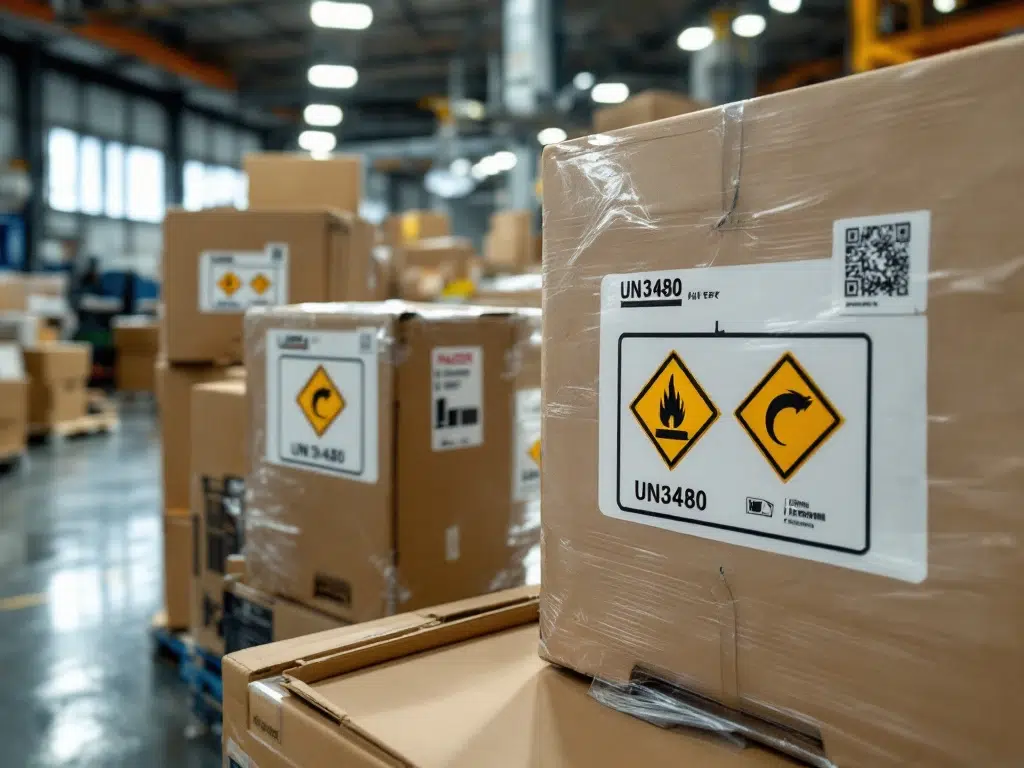
Compliance with industry standards such as UN, NEN, and MIL-STAN is guaranteed through specialized knowledge and experience. This is essential for regulated sectors such as medical, defense, and hazardous materials.
Sustainability is realized through circular design, reuse, and repair possibilities. This contributes to your ESG objectives and reduces environmental impact.
For companies considering switching to custom packaging: start with an analysis of your current packaging costs, damage cases, and logistics challenges. A specialized partner can help develop a business case and design the optimal solution for your specific situation.
How do I determine if custom packaging is cost-effective for my business?
Calculate your current annual damage costs, packaging costs, and logistics inefficiencies. If you regularly ship the same products and the total costs of damage plus standard packaging are higher than the amortized costs of custom work over 3-5 years, then custom packaging is profitable. An ROI analysis usually shows break-even after 50-100 transport movements.
What is the minimum order quantity for industrial custom packaging?
Most suppliers do not maintain strict minimum quantities, but one prototype or a few pieces are possible. For cost optimization, an order of 10-25 pieces is often the tipping point where custom work becomes competitive with adapted standard solutions. Smaller series are possible but have higher costs per piece.
How long does the development and production process for custom packaging take?
The complete process takes an average of 4-8 weeks: 1-2 weeks for analysis and design, 1-2 weeks for prototyping and testing, and 2-4 weeks for production. Complex projects with extensive testing or special materials can take 10-12 weeks. Rush projects are possible in 2-3 weeks for an additional fee.
Can I modify existing custom packaging if my product changes?
Yes, modular designs make adjustments possible without complete redesign. Foam interiors can be replaced, dimensions can be adjusted, and accessories added. Always keep the original design drawings and specifications – this saves 50-70% of redesign costs when making changes.
What warranties do I get on industrial custom packaging?
Standard you get 1-2 years warranty on material and construction defects. For protection performance, the packaging must meet agreed test standards (such as ISTA procedures). Many suppliers also offer service contracts for maintenance and repairs to maximize lifespan.
How do I maintain custom packaging to extend lifespan?
Perform regular visual inspections for damage, wear on hinges and closures. Clean according to material specifications and replace foam interiors when worn. Store packaging dry and out of direct sunlight. A maintenance log helps plan preventive maintenance and extends lifespan by 30-50%.
What happens to my custom packaging at the end of its lifespan?
Modern custom packaging is designed for circular economy. Metal components can be recycled, wood can be reused or composted, and plastics can be recycled or energy recovered. Many suppliers offer take-back programs where old packaging is refurbished or recycled with discounts on new purchases.